

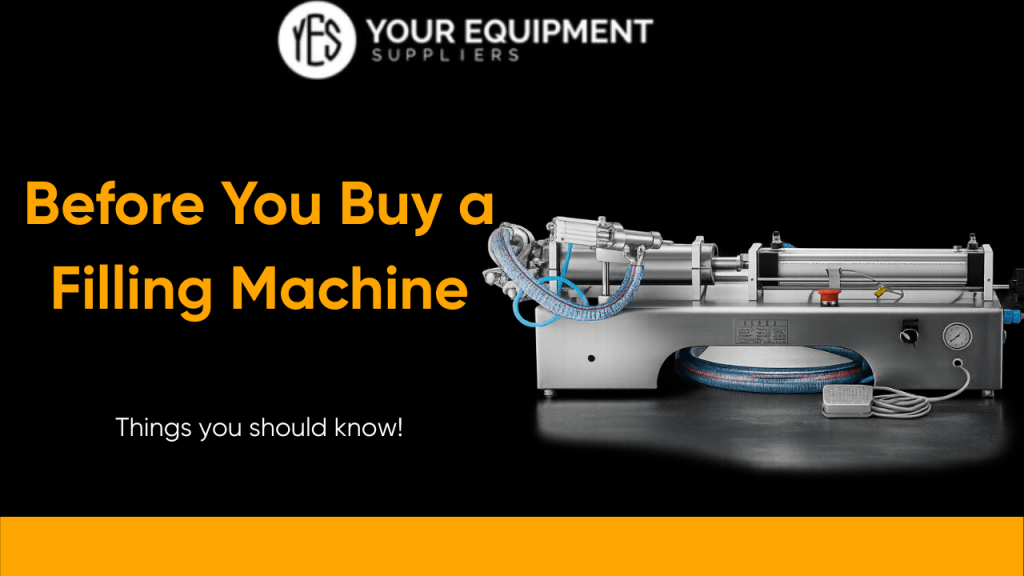
Bigger machines do not always mean bigger profits.
Buying a filling machine seems straightforward.
- You compare prices.
- You compare speeds.
- You compare nozzle counts.
- You look at photos and videos.
- Then you choose a machine.
That is how many businesses start.
But a commercial filling machine is not just another piece of equipment. Once it enters your operation, it affects production capacity, labour requirements, product consistency, packaging quality, waste levels, and ultimately profitability.
That is why buying a filling machine should never be based on speed alone. A faster machine can still be the wrong machine.
The real question is not:
“How many bottles can this machine fill per hour?”
The better question is:
“Can this machine support the way my business actually produces and packages products?”
That is where many businesses make costly mistakes.
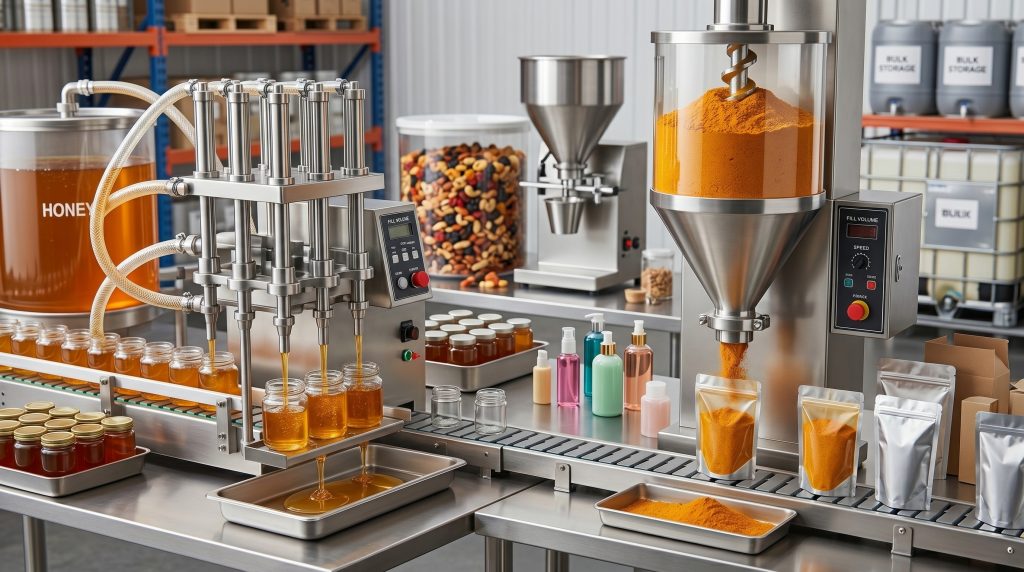
Filling speed matters. But it is not the whole decision.
One of the first specifications buyers look at is output.
Manufacturers often advertise:
- Bottles per minute
- Bottles per hour
- Number of filling heads
- Automatic versus semi-automatic operation
Those numbers are important.
If demand is increasing, production bottlenecks can limit growth.
A filling machine can help:
- Increase output
- Reduce labour
- Improve consistency
- Reduce filling errors
- Improve packaging appearance
- Support business growth
But speed alone does not guarantee success.
A machine may be capable of filling hundreds or thousands of containers per hour and still be completely wrong for your operation.
Because production is about more than output, it is about fit.
A Fast Machine Can Still Be the Wrong Machine
This is one of the most common buying mistakes.
A business sees a larger machine and assumes it is automatically better.
It is not.
A high-speed filling machine may:
- Require more production volume than you currently have
- Demand additional staff
- Need larger batch sizes
- Require more floor space
- Increase cleaning requirements
- Introduce complexity that your team is not ready for
Meanwhile, a smaller machine may provide:
- Better flexibility
- Easier operation
- Faster product changeovers
- Lower investment risk
- Better utilization rates
The goal is not to buy the biggest machine.
The goal is to buy the machine that fits your current operation while supporting future growth.
Product Type Determines the Machine
Not all products fill the same way.
This is where many buyers run into trouble.
A machine that works perfectly for water may perform poorly with:
- Pepper sauce
- Green seasoning
- Honey
- Syrups
- Dressings
- Creams
- Oils
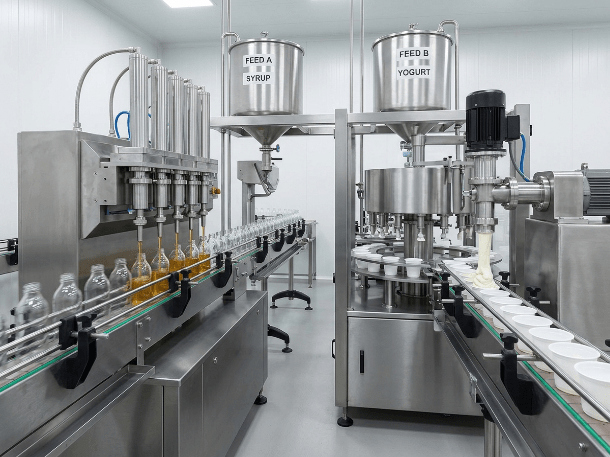
- Yogurt
- Ice cream mixes
- Thick sauces
- Products with particulates
Viscosity matters.
Product consistency matters.
Particle size matters.
Container size matters.
The machine must be matched to the product.
Before buying, ask:
- What products will I fill?
- How thick are they?
- Do they contain particles?
- Will I fill multiple products?
- Will viscosity change during production?
Choosing the wrong filling technology can create constant operational problems.
The Container Matters More Than Many Buyers Realise
Many businesses focus entirely on the product.
But containers create just as many challenges.
Ask yourself:
- What bottle sizes will I use?
- Will I use jars?
- Will I use pouches?
- Will I fill cups or tubs?
- Will I change packaging frequently?
Some machines perform best with standardised containers, while others are better suited for businesses that run multiple package sizes.
If you plan to offer several packaging formats, flexibility becomes extremely important.
A machine that struggles with changeovers can slow production and increase labor costs.
Cleaning and Sanitation Matter
Many buyers think about filling, but few ever think about cleaning until the machine arrives.
Then reality begins.
Questions quickly appear:
- How long does cleaning take?
- How often must it be cleaned?
- How difficult is disassembly?
- Are spare parts easy to access?
- How much downtime is required?
For food businesses, sanitation is not optional.
Products such as:
- Pepper sauce
- Green seasoning
- Syrups
- Sauces
- Dairy products
- Beverages
all require proper cleaning procedures.
A machine that is difficult to clean can create production delays, labour issues, and quality risks.
Accuracy Affects Profitability
Most businesses focus on production speed, but experienced operators focus on fill accuracy. Every overfilled bottle costs money, while every underfilled bottle creates customer complaints.
A small overfill may seem insignificant, but over thousands of units, those small losses add up quickly.
For example:
If a product is overfilled by just 5 grams and you produce 10,000 units per month, you could be giving away significant amounts of product every year.
Accurate filling helps:
- Protect margins
- Improve consistency
- Reduce waste
- Improve customer confidence
- Maintain product specifications
This is one of the hidden ways a filling machine impacts profitability.

The Right Machine Depends on Your Business Model
Not every operation needs the same filling machine.
A startup producing small batches has different needs than an established manufacturer.
Consider your actual operation.
Are you:
- Testing a new product?
- Selling at markets?
- Supplying supermarkets?
- Manufacturing for distributors?
- Exporting products?
- Producing seasonal products?
- Running multiple SKUs?
Your answers should influence the machine you choose.
Buying too many machines too early can tie up capital, but buying too few machines can create bottlenecks.
The right machine matches your current reality while allowing room for growth.
Workflow Determines Efficiency
A filling machine is only one part of the production process.
You still need to consider:
- Product preparation
- Mixing
- Storage
- Filling
- Capping
- Labeling
- Coding
- Packaging
- Shipping
If these systems do not work together, production slows down.
Many businesses blame the filler, but the actual problem is often workflow.
A filling machine cannot resolve bottlenecks elsewhere in the process.
Training Affects Results
A machine does not guarantee good production.
Operators still need training.
Staff need to understand:
- Product handling
- Machine setup
- Fill adjustments
- Cleaning procedures
- Maintenance requirements
- Troubleshooting
Two businesses can buy the same machine and achieve very different results.
One operates efficiently while the other struggles daily.
The difference is often training, processes, and operational discipline.
The Machine is Only One Part of What YES Supports
At YES, we don’t view a filling machine as a standalone purchase.
The machine is important, but successful production depends on much more than equipment.
Businesses also need guidance on:
- Equipment selection
- Product compatibility
- Production workflow
- Packaging choices
- Capacity planning
- Cleaning procedures
- Staff training
- Maintenance practices
Because once the machine arrives, the real work begins.
Any supplier can sell equipment.
YES helps businesses understand how that equipment fits into their production process.
That difference matters.
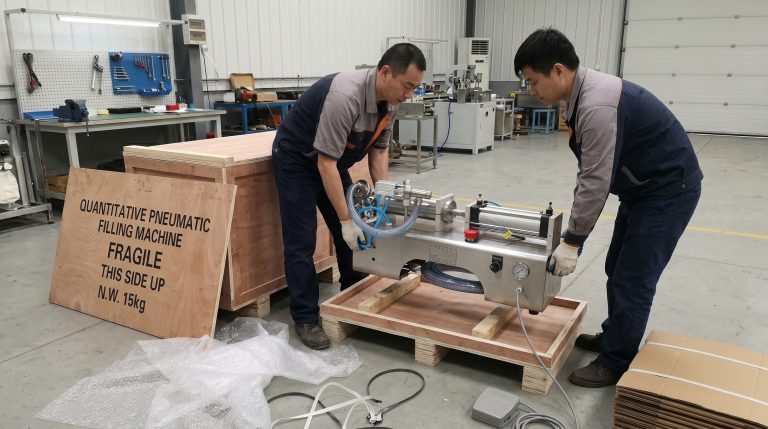
Cheap Equipment Can Become Expensive
Price matters.
Every business has a budget, but focusing only on purchase price can be costly.
The true cost of ownership includes:
- Installation
- Spare parts
- Maintenance
- Downtime
- Labor
- Product waste
- Production inefficiencies
- Lost sales opportunities
A cheaper machine that creates daily problems can become far more expensive than a properly selected machine.
The goal is not the lowest price; its always the best value.
Questions to ask before buying a filling machine
- What products will I be filling?
- How many units do I realistically need to produce?
- What container types will I use?
- How accurate is the filling system?
- How easy is the machine to clean?
- How difficult are product changeovers?\
- What support is available after purchase?
- What maintenance is required?
- Can the machine support future growth
- Does this machine fit my production process?
Training & Support
Purchasing equipment is only part of the process. Proper setup, operation, and maintenance are critical to achieving consistent results and maximising productivity.
We provide guidance on:
- Equipment selection
- Machine operation
- Production workflow
- Cleaning procedures
- Basic maintenance
- Troubleshooting support
This helps reduce startup challenges and ensures your equipment performs as expected from day one.
The Real Decision is Fit
The best filling machine is not necessarily:
- The fastest
- The biggest
- The cheapest
- The most automated
The best filling machine is the one that fits your:
- Product
- Packaging
- Production volume
- Staff
- Workflow
- Budget
- Growth plans
Speed matters, automation matters, but fit matters more.
Need help selecting the right grinder to complete production line?
Before You Buy, Look Beyond the Filling Speed
Filling machines are designed to improve efficiency, but efficiency comes from more than output.
- The product has to flow properly.
- The container has to work.
- The operator has to understand the process.
- The workflow has to make sense.
- The machine has to fit the business.
That is why buying a filling machine should never be treated as a simple equipment purchase. It is a production decision.
Before you buy, make sure you are evaluating more than just speed, because the fastest machine in the room is not always the one that makes the most money.
Need help choosing the right filling machine?
YES helps food manufacturers, beverage producers, pepper sauce makers, seasoning companies, and growing production businesses select filling equipment that fits their products and production goals.
From equipment selection and workflow planning to training and operational support, we help businesses make smarter equipment decisions before they invest.
Talk to YES about filling machines, production planning, and equipment solutions that fit your business.
Every ingredient functions differently under the same conditions. The wrong equipment can lead to poor texture, bottlenecks, and unnecessary costs.
Schedule a consultation, and we’ll help determine the right setup based on your recipe, production volume, bottle sizes, and growth plans.


