

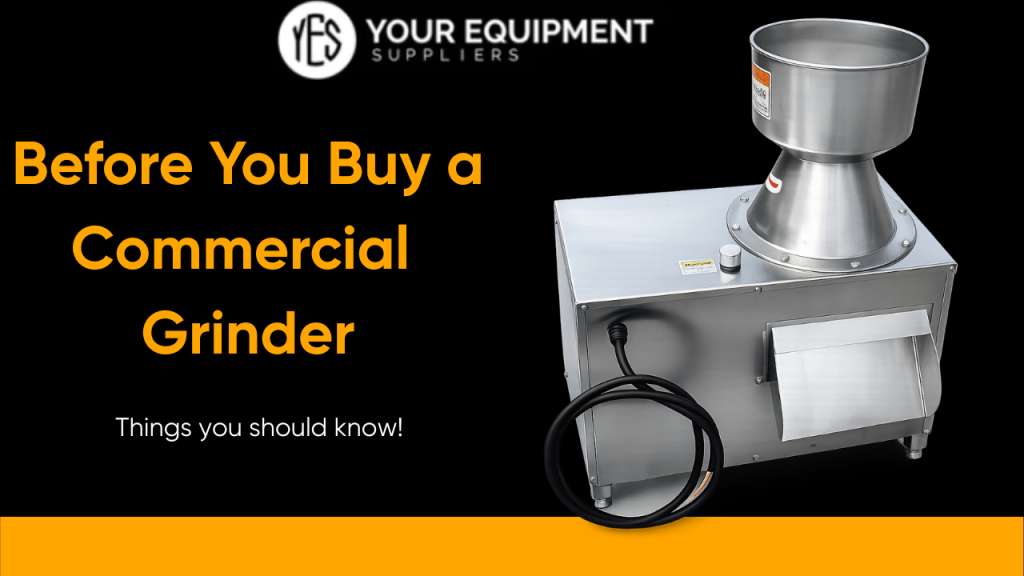
Will This Grinder Produce the Result I Actually Need?
Most people start their grinder search the same way.
- They compare prices.
- They look at horsepower.
- They check the dimensions.
- They ask about voltage.
- Then they choose a machine.
On the surface, that seems logical.
But when it comes to commercial food processing, the biggest mistake buyers make is assuming all grinders produce the same result.
They don’t.
A grinder that works well for pepper sauce may not be suitable for peanut butter. A grinder designed for wet products may struggle with dry spices. A machine that creates a smooth paste may be completely wrong for a product that requires a coarse texture.
That is why the first question should not be:
“How much does this grinder cost?”
The better question is:
“Will this grinder produce the result I actually need?”
Because the success of your operation depends on the product coming out of the machine, not the machine itself.
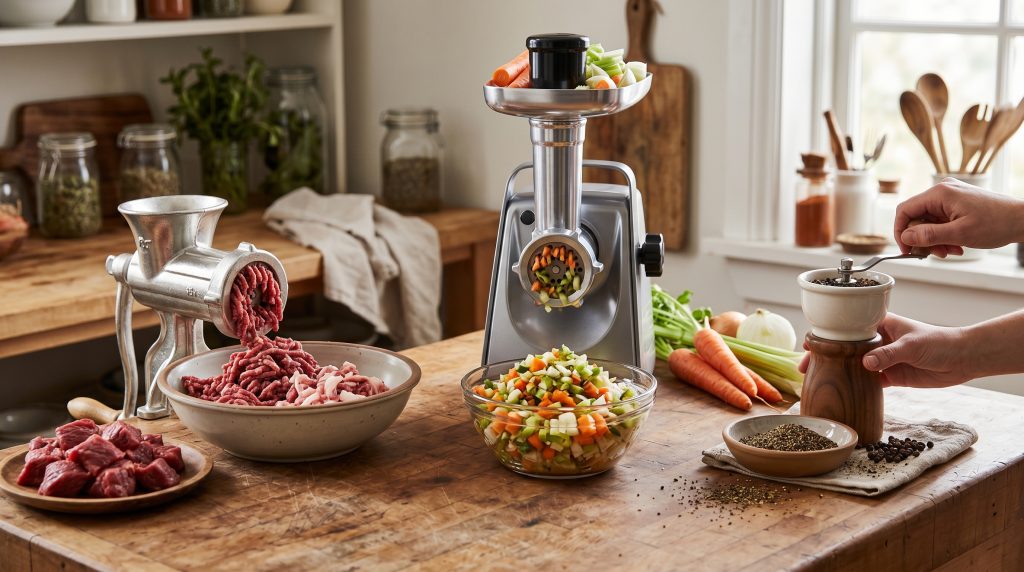
Not All Grinders Produce the Same Result
This is where many businesses make expensive mistakes.
They see two grinders with similar capacities and similar motor sizes and assume they will perform the same way. In reality, the finished product can be completely different.
Some grinders are designed to produce:
- Fine powders
- Smooth pastes
- Thick slurries
- Coarse textures
- Granular products
- Purees
The machine that works perfectly for one product may be entirely unsuitable for another. Before buying a grinder, define exactly what your finished product should look like.
That answer should guide the machine selection.
Not the other way around.
A Powerful Grinder Can Still Be the Wrong Grinder
One of the most common misconceptions is that more power automatically means better performance.
It doesn’t.
A larger motor cannot compensate for the wrong grinding mechanism.
You can have a powerful grinder that:
- Produces the wrong texture
- Generates excess heat
- Damages delicate ingredients
- Creates inconsistent results
- Slows down production
The goal is not simply to buy the most powerful machine. The goal is to buy the right machine for your product.
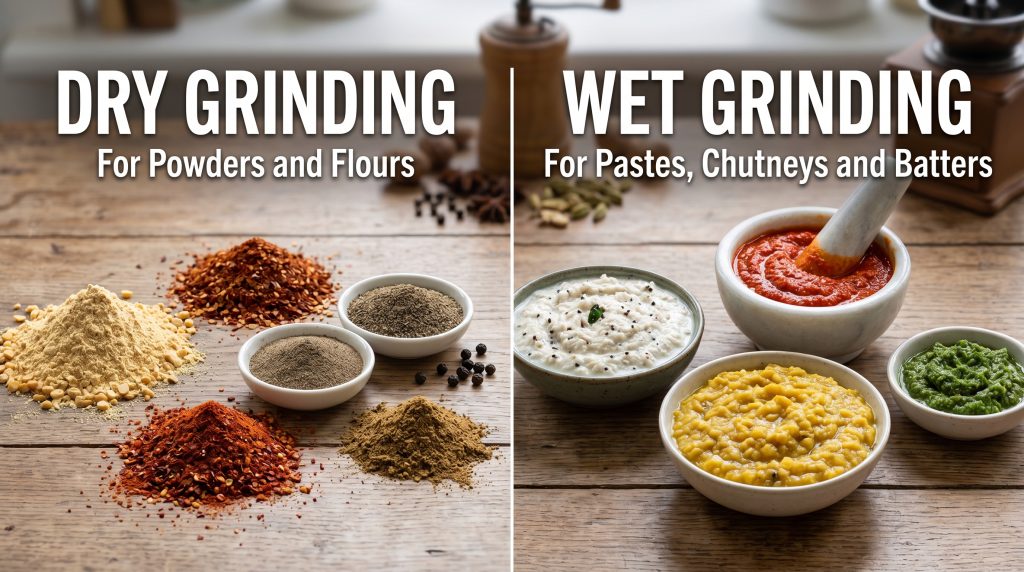
Wet Grinding vs Dry Grinding
This is one of the most important decisions you’ll make.
Many buyers focus on capacity while overlooking whether their application is wet or dry.
Wet Grinding Applications
Examples include:
- Pepper sauce
- Green seasoning
- Marinades
- Pastes
- Peanut butter
- Coconut processing
- Fruit-based products
These products contain moisture and often require different grinding technologies.
Dry Grinding Applications
Examples include:
- Curry powder
- Turmeric powder
- Coffee
- Cocoa
- Dry spices
- Grain products
- Flour production
Machines designed for dry grinding often perform very differently from those used for wet processing.
Choosing the wrong type can affect consistency, efficiency, cleaning, and maintenance.
Your Ingredients Change Everything
Different ingredients behave differently.
For example:
Peppers: Peppers contain moisture and fibrous material that require specific grinding solutions.
Coconut: Coconut can create challenges due to oil content and texture.
Dhal: The desired texture may vary depending on the final product.
Spices: Dry spices often require finer grinding and may generate heat during processing.
Cocoa:Particle size can significantly impact the finished product.
The ingredient itself often determines which grinder is most suitable.
Capacity Matters More Than You Think
Many businesses buy equipment based on current production.
That can be a mistake.
If the machine cannot keep up with demand, it quickly becomes a bottleneck.
Common signs include:
- Long production times
- Staff waiting on equipment
- Missed orders
- Inconsistent output
- Overtime labour costs
At the same time, oversizing equipment can increase costs unnecessarily.
The goal is to balance current needs with realistic growth plans.

Cleaning and Food Safety Matter
A grinder may perform well during production.
But what happens after production ends?
Cleaning affects:
- Food safety
- Product quality
- Labor costs
- Downtime
- Regulatory compliance
Ask questions such as:
- How easily can the grinder be disassembled?
- Which parts contact food?
- How long does cleaning take?
- Are replacement parts readily available?
The answers can have a major impact on daily operations.
The Machine Is Only Part of the Process
Many grinding problems are not machine problems.
They are process problems.
For example:
- Poor ingredient preparation
- Inconsistent feeding
- Incorrect moisture levels
- Lack of staff training
- Poor workflow design
Even the best grinder cannot compensate for poor production practices.
A successful operation requires the machine and the process to work together.
What Happens After the Grinder Arrives?
The purchase is not the finish line; it’s the starting point.
Once the grinder arrives, businesses still need to consider:
- Installation
- Power requirements
- Product testing
- Staff training
- Workflow optimization
- Cleaning procedures
- Maintenance schedules
These factors determine whether the equipment becomes an asset or a headache.
The Machine Is Only One Part of What YES Supports
At YES, we understand that buying a grinder is about more than buying equipment.
The machine matters.
But so do the product, process, workflow, and people using it.
That’s why we help businesses evaluate:
- Ingredient type
- Desired texture
- Production volume
- Cleaning requirements
- Workflow considerations
- Equipment suitability
Because choosing the right grinder starts with understanding what you’re trying to produce. Not simply choosing the machine with the biggest motor or lowest price.
Questions to Ask Before Buying a Commercial Grinder
Before investing, ask:
- What product am I making?
- What texture do I need?
- Is this a wet or dry application?
- What production volume do I need?
- How easy is it to clean?
- What power requirements does it have?
- Are replacement parts available?
- Can it grow with my business?
- What support is available after purchase?
- Is this the right grinder for my specific ingredient?

Training & Support
Purchasing equipment is only part of the process. Proper setup, operation, and maintenance are critical to achieving consistent results and maximising productivity.
We provide guidance on:
- Equipment selection
- Machine operation
- Production workflow
- Cleaning procedures
- Basic maintenance
- Troubleshooting support
This helps reduce startup challenges and ensures your equipment performs as expected from day one.
The Real Decision Is Product Fit
The best commercial grinder is not necessarily the biggest.
It is not necessarily the cheapest.
And it is not necessarily the most powerful.
The best grinder is the one that consistently produces the product your business needs.
When evaluating equipment, focus on the end result first.
Because in food processing, the product coming out of the grinder matters far more than the specifications printed on the machine.
Need help selecting the right grinder to complete production line?
Need Help Choosing the Right Commercial Grinder?
Whether you’re producing pepper sauce, green seasoning, spices, peanut butter, coconut products, or other food items, YES can help you identify the right grinder for your operation.
Talk to our team about your product, production goals, and processing requirements before you invest in equipment.
Every ingredient functions differently under the same conditions. The wrong equipment can lead to poor texture, bottlenecks, and unnecessary costs.
Schedule a consultation, and we’ll help determine the right setup based on your recipe, production volume, bottle sizes, and growth plans.


