

Client Snapshot
From Small-Batch Processing to Scalable Dehydrated Food Production
Business: D’s Original
Owner: Debra George
Location: Trinidad & Tobago
Operation Type: Fruit & Food Processing
YES Equipment
Shredding & Slicing Machine
Grinder/Processor
Commercial Dehydrator (20 Tray)
1. BEFORE → AFTER TRANSFORMATION
The Commercial Dehydrator, Grinder/Processor, and Shredding & Slicing Machine became the foundation behind D’s Original’s transformation from a labour-intensive, small-capacity production operation into a more efficient and scalable food processing business.
THE PROBLEM (BEFORE): MANUAL PRODUCTION LIMITATIONS
D’s Original had built a growing reputation for quality fruit-based products and confectionery items. Demand was increasing, customers were placing more frequent orders, and the business was gaining momentum.
The challenge was production capacity.
The business relied on a small 10-shelf dehydrator that limited output and created production bottlenecks. As demand increased, keeping up with orders became more difficult.
Manual preparation and limited dehydration capacity restricted growth and reduced the amount of product that could be produced during each production cycle.
The business had reached the point where growth was becoming constrained by its production system.
| BEFORE (Manual + Labour Intensive) | AFTER (Efficient + Scalable) |
|---|---|
| Small 10-shelf dehydrator | Commercial 20-tray dehydrator |
| Limited production capacity | More than double production capacity |
| Labour-intensive processing | Improved labour efficiency |
| Longer production cycles | Approximately 50% faster processing |
| Limited ability to fulfil orders | Increased production flexibility |
| Production bottlenecks | Improved workflow |
| Lower consistency | Improved product consistency |
| Capacity restrictions | Capacity aligned with growth |
2. Market Context: Why This Upgrade Matters
The global dehydrated food market continues to expand as consumers increasingly seek healthier snacks, natural fruit products, herbal teas, and longer shelf-life food products.
The global dried fruit market is estimated to exceed USD $11 billion and is projected to continue growing as demand rises for convenient and healthier food alternatives.
Across the Caribbean, value-added agricultural products such as dried fruits, fruit snacks, herbal teas, spices, and speciality confectionery products are gaining popularity among consumers, retailers, and export markets.
Locally, food processors are increasingly moving beyond raw agricultural sales and investing in value-added processing to improve margins and create more sustainable businesses.
For food processors, the opportunity is significant.
The real question becomes:
Can the business consistently produce enough product to meet demand while maintaining quality and profitability?
That is where equipment becomes more than a purchase; instead, it becomes a growth strategy.
For D’s Original, investing in commercial processing equipment positioned the business for larger production volumes, stronger customer fulfilment, and future Caribbean expansion.
3. The Business Problem: Demand Was Outgrowing Production
Many food businesses are not limited by customer demand.
They are limited by production infrastructure.
For D’s Original:
- Customer demand already existed.
- Orders were becoming more frequent.
- The products were proven.
- The market opportunity was there.
- The issue was capacity.
The existing production process created limitations such as:
- Small dehydration capacity
- Labour-intensive production
- Longer production times
- Production bottlenecks
- Limited throughput
- Reduced efficiency
- Less time for growth activities
- Limited ability to scale production
The business had reached a point where manual methods were no longer aligned with its growth ambitions.
| Before the Upgrade | After the Upgrade |
|---|---|
| Labour-intensive production | Improved production efficiency |
| Small dehydration capacity | Larger production batches |
| Longer processing times | Approximately 50% faster production |
| Limited output | More than double output capacity |
| Growth constrained by equipment | Capacity aligned with growth |
| More operational pressure | Improved workflow |
| Limited time for expansion | More time for business development |
4. The Bottleneck: Production Capacity
One of the clearest examples of the production bottleneck was dehydration capacity.
Before upgrading, D’s Original could process approximately:
15–20 Pounds Per Batch
With the new commercial dehydrator, the company can now process approximately:
35–40 Pounds Per Batch
Capacity Increase
Using average figures:
37.5 lbs ÷ 17.5 lbs
= 2.14 Times Larger Batches
= 114% Increase In Batch Capacity
This allowed the business to dramatically increase production volume without increasing production time proportionately. Overall production output increased significantly while consistency improved across batches.
Most importantly, D’s Original gained the confidence to continue accepting more frequent customer orders. For growing food processors, this is where equipment stops being an expense and becomes a growth enabler.
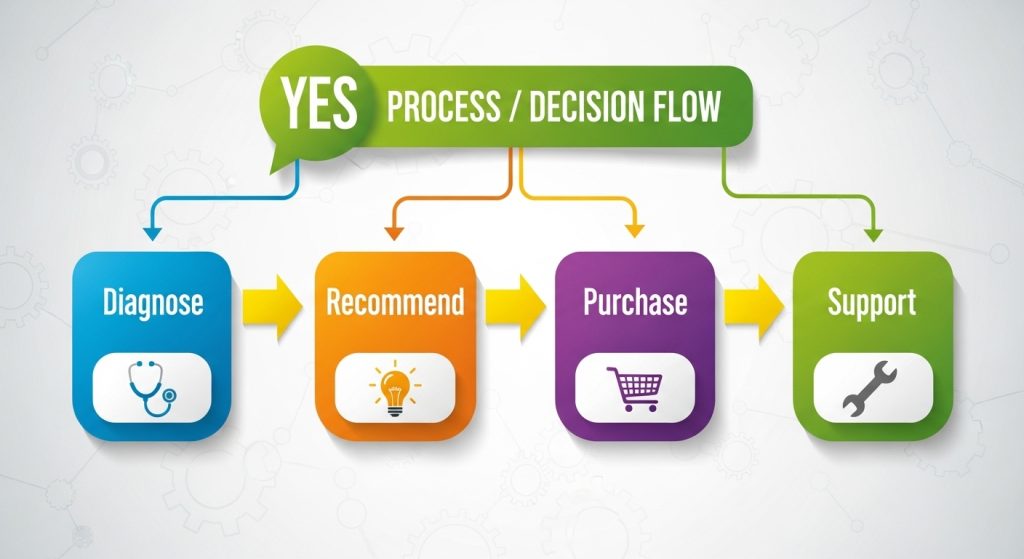
5. YES Recommendation (Strategic Equipment Stack)
THE SOLUTION
Rather than solving a single bottleneck, the goal was to modernise the production process from preparation through dehydration.
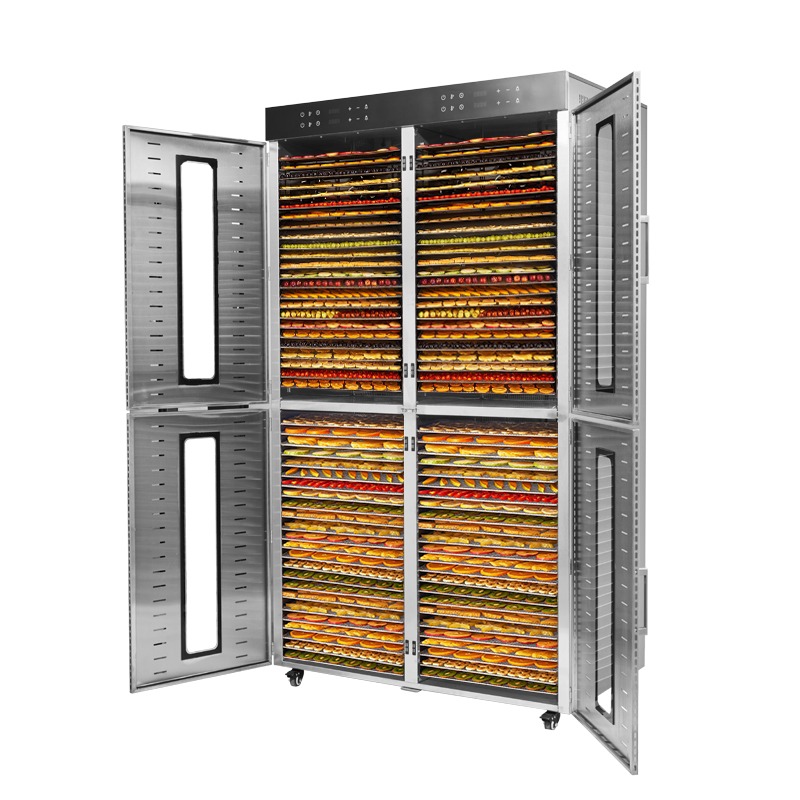
Commercial Dehydrator
→ Increased production capacity
→ Ingredient preservation
→ Expanded product development opportunities
→ Better product quality
→ Improved production flexibility
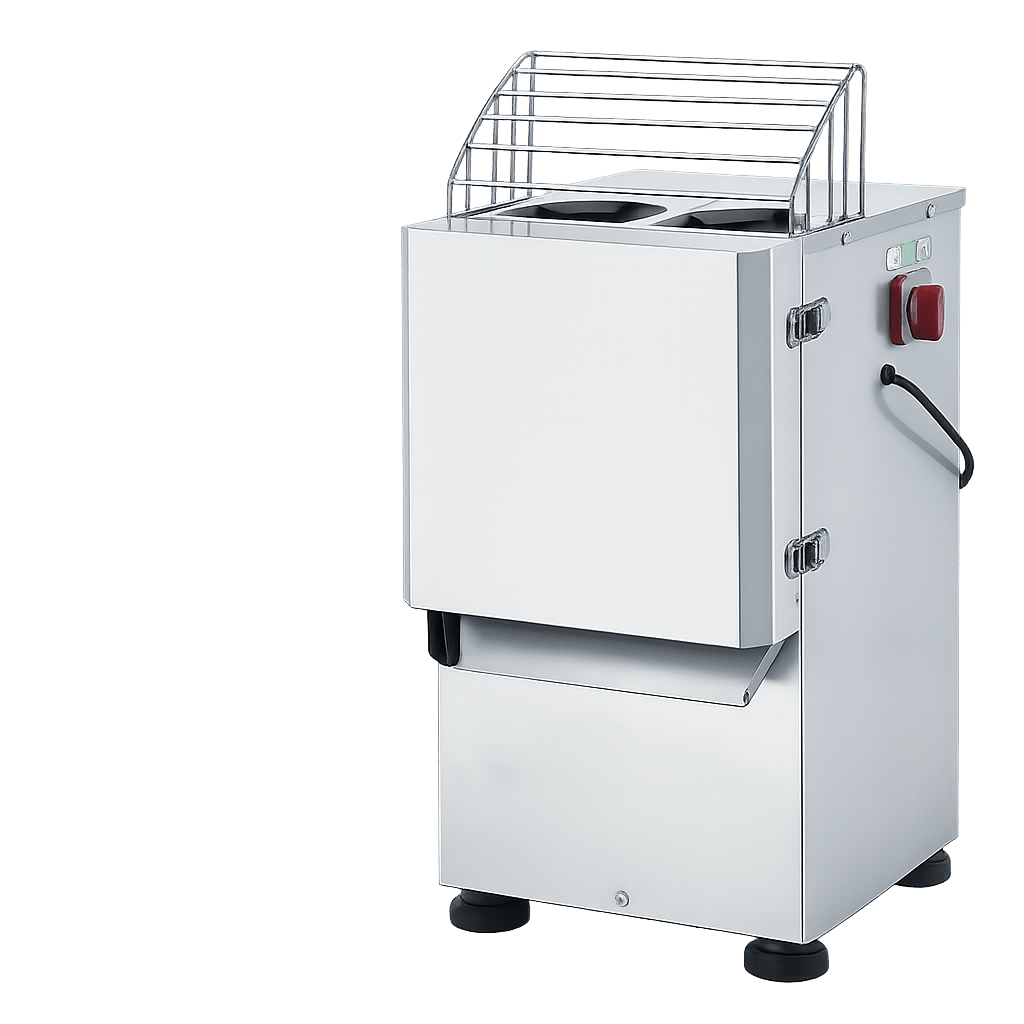
Vegetable Slicer Machine
→ Faster ingredient preparation
→ Improved consistency
→ Reduced labour requirements
→ Improved workflow efficiency
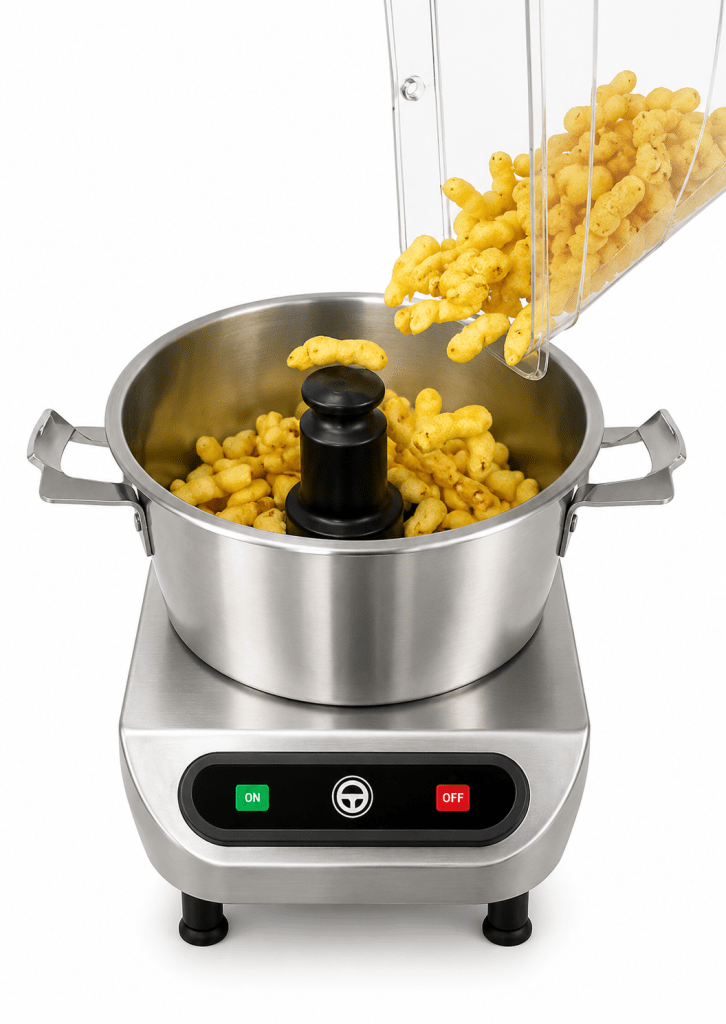
→ Faster ingredient processing
→ Reduced manual labour
→ Improved workflow efficiency
→ Greater production flexibility
What YES Added:
✔ Equipment matching to production needs
✔ Practical guidance and support
✔ Confidence in performance and reliability
✔ Customer support and communication
✔Ongoing assistance when questions came up
Not just a machine; a production upgrade.
6. Results: Operational & Business Impact
1. Production Time Reduced By Approximately 50%
The new equipment dramatically reduced production time.
Impact
- Faster production cycles
- Improved workflow
- More output produced
- Greater operational efficiency
Customer Quote
“If I was taking eight hours before, I now take about half the time.”
2. Capacity Increased By More Than 100%
Production increased from approximately:
15–20 lbs per batch to 35–40 lbs per batch
Impact
- Larger production runs
- More customer orders fulfilled
- Increased growth potential
- Improved production flexibility
Customer Quote
“The biggest benefit has been the capacity.”
3. Revenue Increased By Approximately 35%–40%
The increase in production capacity translated into greater sales opportunities.
Impact
- Higher sales volume
- Increased business activity
- Greater profitability potential
- Improved scalability
Customer Quote
“Revenue increased about 35 to 40 per cent.”
4. Improved Product Consistency
The upgraded equipment created more reliable production outcomes.
Impact
- Better quality control
- More consistent products
- Greater customer confidence
- Stronger brand reputation
Customer Quote
“Consistency has improved.”
5. More Time For Business Development
The time savings created opportunities beyond production.
Impact
- More time for planning
- More time for expansion activities
- More time for business development
- Better operational flexibility
Customer Quote
“It helps me focus on other parts of the business.”
ROI Example: Labour Efficiency
The financial value of the investment can be understood through time savings.
Debra estimates that production time has been reduced by approximately 50%.
Using an illustrative example:
4 Hours Saved Per Production Day
Valued At:
TTD $30 Per Hour
TIME SAVED4 LABOUR HOURS / DAY REGAINEDProduction reduced from approximately 2 days to 1 day. → Same output achieved in significantly less time 4 hrs/day × 3 days = 12 hrs/week recovered per week |
WEEKLY VALUE (LABOUR EFFICIENCY)Valued @ TTD 30/hr 12 hrs × 30 = TTD $360/week saved |
YEARLY IMPACTTTD 360/week × 52 = TTD 18,720/year in labour efficiency |
PAYBACK CALCULATIONEquipment InvestmentShredding & Slicing Machine – TTD $4,701.20 Grinder/Processor – TTD $10,500.00 Commercial Dehydrator – TTD $11,500.00 Total InvestmentTTD $26,701.20 ROI YEAR 1:18,720 ÷ 26,701.20 = 70% Operational Payback in one year. |
***These figures are used as an example only***
Estimated First-Year Payback
70% Operational Payback
The labour efficiency value alone could recover a substantial portion of the equipment investment within the first year.
Estimated payback period:
TTD $26,701.20 ÷ TTD $360/week
= 74 Weeks
or approximately:
17 Months
However, this calculation is intentionally conservative, because at present, Debra does not fully utilise the equipment’s available capacity. Production is typically conducted only two days every two weeks, meaning the equipment is operating well below its maximum potential.
As customer demand continues to grow and production frequency increases, the actual payback period could be significantly shorter. The equipment was purchased not only for current production needs, but also to create the capacity required for future growth.
And that still does not include:
- 114% increase in batch capacity
- 35–40% revenue growth
- Improved consistency
- Increased production capacity
- Greater customer fulfilment
- Reduced operational stress
- Future Caribbean expansion opportunities
- Increased profitability
7. What Would Have Happened Without the Equipment?
Without upgrading, D’s Original would likely have continued facing:
- Longer production schedules
- Smaller batch sizes
- Capacity limitations
- Difficulty meeting growing demand
- Reduced operational flexibility
- More labour-intensive workflows
- Limited growth opportunities
Production would likely have continued, requiring approximately four production days every two weeks simply to maintain output.
As demand increased, additional production time would have been required, creating more pressure on the business. That means that demand would continue growing, but the production system would remain the bottleneck
8. Customer Testimonial
“I would recommend YES, especially for the dehydrator. I’ve gotten very good use out of it.
The equipment has helped increase productivity, improve consistency, and save a lot of time. The biggest benefit has been the increased capacity.
It allows me to focus on other parts of the business because production takes less time than before.
For any business owner who is still doing things manually, I would tell them that machinery saves a lot of time and increases productivity compared to doing everything by hand.”
Debra George, Owner, D’s Original
9. Why This Matters for Other Business Owners
D’s Original reflects a challenge faced by many food processors throughout Trinidad & Tobago and the wider Caribbean.
The only thing limiting some businesses is the lack of infrastructure, not a lack of ambition.
As businesses grow, the pressure usually appears in the same areas:
- Too much manual labour
- Limited production capacity
- Long production schedules
- Difficulty meeting demand
- Inconsistent output
- Less time for business development
- Increased operational stress
For D’s Original, they had the customer base, but simply couldn’t produce the amount needed in the timeframe.
Before investing in equipment, production often required four production days every two weeks. Today, similar production can be completed in approximately two production days every two weeks.
The result is more capacity, more flexibility, and more opportunity for growth.
At this point, the choice that businesses face is always the same. It’s either they invest in upgrading, or they fall victim to inefficiency.
D’s Original chose to upgrade.
10. Long-Term Value: What the Investment Continues to Return
The ROI calculation only measures the first year of labour efficiency, but the real value comes after the equipment has already paid for itself. Most importantly, the current ROI example is based on a business that is not yet utilising the equipment to its maximum capacity.
Debra currently produces only a few days each month, meaning there is substantial unused production capacity already available within the operation.
As production frequency increases, the same equipment can support significantly higher output without requiring equivalent increases in labour costs.
The investment, therefore, continues delivering:
- Improved labour efficiency
- Faster production
- Greater capacity
- Improved consistency
- Better workflow control
- Increased profitability
- Expanded market access
- New product opportunities
- Greater owner flexibility
Unlike recurring labour expenses, the equipment continues creating value year after year while providing additional capacity for future growth.
11. Labour Capacity Created Through Equipment
Total Time Recovery Per Year
Using the illustrative ROI example:
12 Labour Hours Saved Per Week
12 hours/week × 52 weeks
= 624 Labour Hours Recovered Per Year
That equals approximately:
- 78 full 8-hour workdays
- More than 15 working weeks
- Over 600 productive hours returned to the business annually
What Did This Additional Capacity Create?
The additional productive capacity enabled the business to:
- Increase production by over 100%
- Improve product consistency
- Accept more customer orders
- Focus on business growth
- Batch capacity increased by 114%
- Revenue increased by approximately 35–40%
- Product consistency improved
- More orders could be accommodated
- More time became available for business development
- Improve operational efficiency
Importantly, D’s Original is currently using only a fraction of the production capacity available through the equipment. Production is typically carried out only two days every two weeks, meaning significant additional capacity already exists without requiring major additional equipment investment.
As demand increases, the business can expand production using the same equipment platform before needing further upgrades.
This makes the current ROI calculation highly conservative because it reflects current production habits rather than the equipment’s full earning potential.
What Can TTD $18,720 Per Year Help Fund?
The value created through improved labour efficiency can now be directed toward:
- Expanding product lines
- Purchasing additional equipment
- Increasing production capacity
- Improving packaging and branding
- Entering new retail markets
- Building distribution networks
- Preparing for exports
- Hiring support staff
- Strengthening cash reserves
Or on a personal level:
- More quality time with loved ones
- Personal development
- Reduced financial stress
- Better work-life balance
The value no longer needs to be absorbed by inefficient production methods. Instead, it can be reinvested into both business growth and quality of life.
12. The Bigger Business Shift
Before the Investment
- Small 10-shelf dehydrator
- Four production days every two weeks
- 15–20 lb production batches
- Labour-intensive workflow
- Limited production capacity
- Longer production schedules
- Difficulty scaling output
After the Investment
- Commercial 20-tray dehydrator
- Approximately two production days every two weeks
- 35–40 lb production batches
- 114% greater batch capacity
- Approximately 50% less production time
- Improved consistency
- 35–40% revenue growth
- Greater operational flexibility
- More time for business development
- Capacity for Caribbean expansion
The equipment did not simply save time.
It transformed D’s Original from a small-scale processing operation into a more scalable food manufacturing business with the capacity, consistency, and efficiency needed to support future growth.
13. Why YES Wins
Other suppliers sell machines.
YES sells outcomes.
Typical Seller | YES |
| “Here’s the machine.” | “Here’s your bottleneck removed.” |
| Price-based | ROI-based |
| Transactional | Partnership + support |
| Equipment Only | Equipment+ Guidance + Results |
| Generic Recommendations | Production-matched solutions |
Final Takeaway
D’s Original did not simply purchase a Commercial Dehydrator, Grinder/Processor, and Shredding & Slicing Machine.
They:
- upgraded their production system.
- reduced production time by approximately 50%.
- reduced production requirements from approximately four production days every two weeks to two production days every two weeks.
- increased batch capacity from approximately 15–20 pounds to 35–40 pounds.
- improved product consistency.
- increased revenue by approximately 35–40%.
- recovered valuable production time.
- created more room for business development, future expansion, and Caribbean export opportunities.
For business owners, the lesson is simple:
- Growth is not only about increasing sales.
- Growth requires the production capacity to support those sales.
If your business is already seeing demand but struggling with labour-intensive production, long production schedules, limited capacity, or inconsistent output, the issue may not be marketing; it may be your production system.
For D’s Original, the challenge wasn’t creating demand; it was producing enough product efficiently while maintaining consistency and creating room for future growth.
By investing in the right equipment, the business was able to produce more product in less time, improve consistency, and create the capacity needed to support expansion.
At YES, we help food manufacturers identify the operational bottlenecks limiting growth and match them with equipment designed around their actual production needs.
Because the right equipment doesn’t simply improve production; it creates the foundation for sustainable growth.
Stop producing in limits. Start producing at scale.
Book a consult: Right Machine. Right Outcome. Zero Guesswork.


