

A few years ago, a production manager described a problem that didn’t look like a problem at first. The line was running. Orders were shipping. Yet every few weeks, pallets came back from distributors with the same quiet complaint: labels were slightly crooked, barcodes didn’t scan consistently, and some bottles looked “off” on the shelf. Nothing catastrophic. Just enough to create friction, rework, and uncomfortable conversations with customers.
The root cause wasn’t the product, the packaging, or the staff. It was a labelling machine that had been selected quickly, without fully matching it to the realities of the production line.
Labelling often feels like the final, simple step in production. In reality, it’s where branding, compliance, and efficiency collide. Choosing the right labelling machine isn’t about buying the most advanced equipment available. It’s about choosing the right one for how you actually operate.
Why Labelling Deserves More Thought Than It Usually Gets
Labels carry more responsibility than most people give them credit for. They communicate compliance information, batch and traceability data, branding, and shelf appeal in a matter of seconds. If a label is crooked, damaged, or inconsistent, the product immediately feels less reliable, even if what’s inside is perfectly fine.
From an operational standpoint, labelling problems rarely announce themselves loudly. Instead, they show up as small inefficiencies: extra manual adjustments, rejected units, slower packing, or customer complaints that are hard to pin on a single cause. Over time, those small issues add up.
Choosing the right labelling machine is less about bells and whistles and more about alignment with how your production line actually works.

Start with the Product, Not the Catalogue
A common mistake is to begin the selection process by comparing machine models rather than examining the product being labelled. Before looking at specifications or price ranges, take a clear look at what you’re running through the line.
Container shape is a major factor. Cylindrical bottles, square jars, tapered containers, flat packs, pouches, and irregular shapes all behave differently during label application. A machine that performs perfectly on round bottles may struggle with corners or flexible packaging.
Label material matters just as much. Paper labels, clear film, shrink sleeves, and pressure-sensitive labels each place different demands on the machine. Adhesive type, label thickness, and backing liner quality all influence how consistently labels are applied.
If the machine isn’t designed around your specific container and label combination, precision becomes something you fight for rather than something you get by default.

Be Honest about Speed, Volume, and Growth
Every labelling machine has a speed range where it performs best. Buying a machine rated far beyond your actual needs can be an expensive way to gain very little. Buying one that barely keeps up with your line is far worse.
Look at your current throughput, but also consider where the business is heading. If you’re producing 40 units per minute today but planning to scale to 70 within a couple of years, the machine should handle that comfortably without running at its limits.
Also consider how your line behaves day to day. Frequent start-stops, short production runs, and changeovers can affect performance just as much as top speed. Some machines cope better with variable conditions than others.

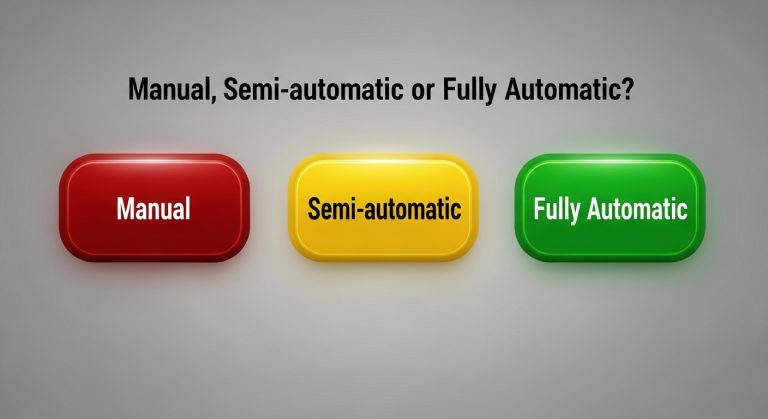
Manual, Semi-automatic, or Fully Automatic?
There is no universal “best” level of automation. The right choice depends on your production volume, staffing model, and need for consistency.
Manual and semi-automatic labelling machines are well-suited to smaller operations, specialty products, or businesses with frequent changeovers. They offer flexibility and lower upfront cost, but rely more on operator skill and attention.
Fully automatic labelling machines excel in continuous, high-volume environments. They deliver speed and repeatability, integrate seamlessly with conveyors, and reduce labour input. The trade-off is higher capital cost, greater space requirements, and a more complex setup.
The goal is not maximum automation for its own sake. It’s choosing the level that fits your operation without creating new bottlenecks.
Integration with the Rest of the Line
A labelling machine never works in isolation. It has to fit physically and operationally into the production line you already have.
Conveyor height, line direction, available floor space, and product spacing all matter. Poor integration can lead to misfeeds, jams, or products arriving at the labeller in unstable positions, even if the machine itself is well designed.
If you use date coders or batch printers, ensure the labelling system can accommodate them cleanly. Poorly integrated coding solutions often become a source of downtime and inconsistent marking.
Thinking about integration early avoids expensive modifications later.
Accuracy, Adjustability, and Changeovers
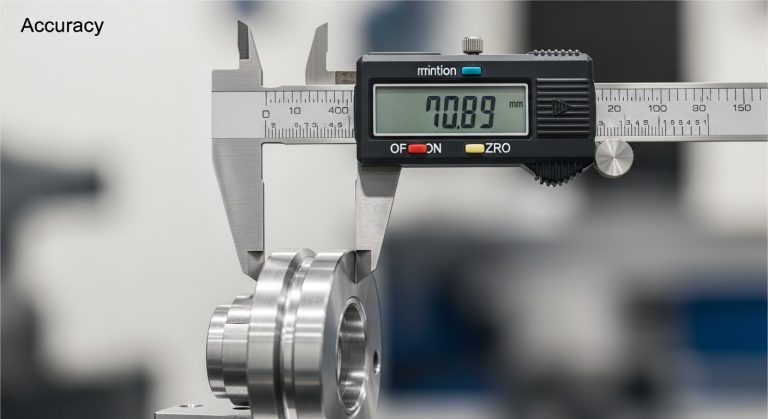
Precision is not just about how straight a label goes on under perfect conditions. It’s about how easily the machine can be adjusted when conditions change.
If you run multiple SKUs, container sizes, or label designs, quick and repeatable changeovers are critical. Machines with clear adjustment points, reliable guides, and memory settings reduce setup time and operator frustration.
A machine that requires constant fine-tuning to maintain accuracy will eventually slow the entire line, even if its advertised speed looks impressive.
Maintenance and Long-Term Reliability
Labelling machines often run quietly in the background, which makes it easy to neglect routine maintenance. Over time, worn rollers, stretched belts, or dirty sensors can cause small alignment issues that are hard to diagnose.
When choosing a machine, look beyond the initial specification. Consider how easy it is to clean, inspect, and maintain. Ask about spare parts availability and local technical support. A machine with strong after-sales support often delivers better long-term value than a cheaper option with limited backup.
Reliability isn’t just about build quality. It’s about how quickly you can recover when something inevitably goes wrong.
A Practical Buyer’s Guide Mindset
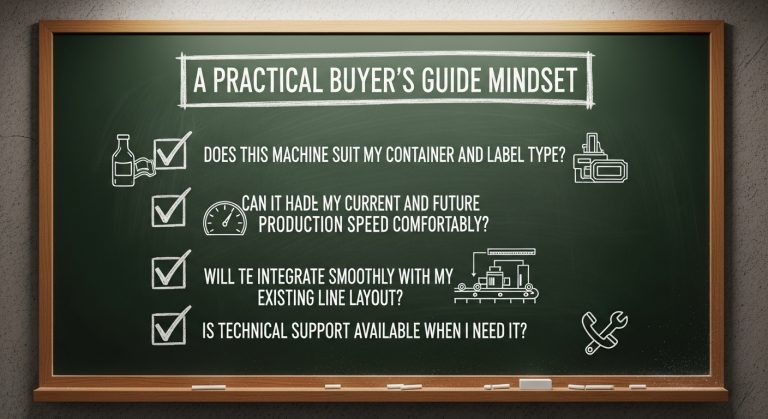
Rather than trying to memorise every technical detail, approach the decision with a few grounded questions in mind:
- Does this machine suit my container and label type?
- Can it handle my current and future production speed comfortably?
- Will it integrate smoothly with my existing line layout?
- Is technical support available when I need it?
If a machine answers those questions well, you’re already avoiding most common mistakes.
Precision Now Prevents Problems Later
Labelling machines rarely get the attention given to fillers or ovens, yet they sit at the intersection of compliance, efficiency, and brand perception. A well-chosen labeller reduces waste, improves consistency, and gives your team one less variable to manage during a busy shift.
Choosing the right machine isn’t about buying the most advanced option on the market. It’s about selecting equipment that fits your product, your people, and your production reality.
When labels go on cleanly, consistently, and without fuss, that’s not luck. It’s the result of making the right choice early, and letting the machine do the job it was designed to do.


