


Some products survive because of marketing. Others survive because they solve a problem so well that they never become outdated.
Coconut water falls firmly into the second category.
Long before it appeared in branded cartons and glass bottles, it was being enjoyed straight from the source in tropical regions around the world. In the Caribbean, Southeast Asia, the Pacific Islands, and parts of Central and South America, drinking coconut water has never been a trend. It has simply been normal life.
You’re out in the heat. Someone opens a green coconut. That’s your refreshment.
No campaign required.
What Coconut Water Actually Is
Coconut water is the clear liquid found inside young green coconuts. It is not coconut milk, which is made from the grated flesh of mature coconuts mixed with water. Coconut water forms naturally as part of the fruit’s development.
Inside the sealed shell, the liquid stays clean and protected. It contains naturally occurring electrolytes, including potassium, sodium, magnesium, and calcium, which help regulate fluid balance in the body. Electrolytes are essential because they allow muscles to contract properly, nerves to transmit signals, and cells to maintain hydration.
Potassium is especially notable. Coconut water often contains a high level of it compared to many other beverages. That makes it particularly helpful after sweating, exercising, or spending long hours in hot weather.
It’s light, mildly sweet, and easy to drink. It hydrates without heavy syrups or artificial colours. For many people, that simplicity is part of its appeal.
But coconut water also carries one of the most unusual stories in food history.

The World War II Emergency Use
During World War II, in certain remote Pacific regions where medical supplies were limited, coconut water was reportedly used in emergencies as a temporary intravenous hydration fluid when sterile saline wasn’t available.
That sounds extraordinary, but there’s a biological reason it was even considered.
Fresh coconut water inside an unopened green coconut is naturally sterile. The thick husk and hard shell protect the liquid from outside contamination. In emergency conditions, medical personnel were able to access the liquid directly from the coconut using sterile equipment.
The second reason is its composition. Coconut water contains electrolytes in proportions that are somewhat similar to human plasma; the liquid component of blood responsible for carrying salts and nutrients.
It’s important to be clear here. Coconut water is not a perfect substitute for medical IV fluids. It does not match plasma exactly, and it is not used this way in modern medical practice. Today’s intravenous solutions are carefully balanced for safety and precision.
However, in extreme wartime circumstances, when sterile saline was unavailable, coconut water reportedly worked well enough to temporarily hydrate and stabilise patients.
It is rare for a fruit to be biologically compatible enough to even serve as an emergency option in that context. The story has endured not because it’s dramatic, but because it highlights how closely aligned coconut water is with human hydration needs.
A naturally sealed source of sterile fluid with a useful electrolyte profile.
That is remarkable.
Why Coconut Water Never Goes Out of Style
Trends fade when they depend on novelty. Coconut water depends on physiology.
People sweat. People live in warm climates. People exercise. People travel. People experience dehydration.
None of those realities are going away.
As long as humans need hydration beyond plain water, beverages that replenish electrolytes will remain relevant. Coconut water offers that in a naturally occurring form.
It also fits comfortably into modern dietary preferences. It is plant-based. It is dairy-free. It generally contains no artificial additives when consumed fresh. It doesn’t need to be reformulated to meet new wellness standards because it already aligns with many of them.
That makes it resilient.
Cultural Depth Matters
Another reason coconut water has global staying power is geography.
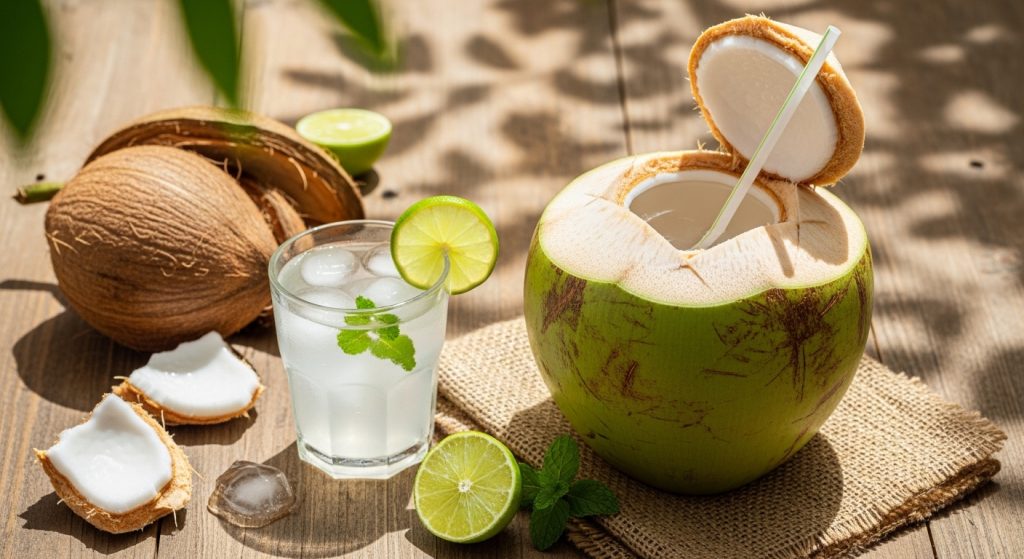
Coconuts grow widely across Asia, the Caribbean, Central and South America, Africa, and Oceania. In many of these places, coconut water is not marketed as a specialty health drink. It is an everyday beverage.
Street vendors sell fresh coconuts. Families serve them at gatherings. It is consumed casually and routinely.
When something is embedded in daily habits across multiple continents, it does not disappear. It simply expands into new markets. Bottled versions introduced convenience, but the practice itself is centuries old.
That depth of cultural use gives coconut water stability that most food trends lack.
The Practical Health Benefits
From a nutritional standpoint, coconut water may:
Support hydration due to its electrolyte content
Help replenish potassium lost through sweat
Provide modest amounts of magnesium and calcium
Offer small amounts of antioxidants
Some studies suggest coconut water can be as effective as traditional sports drinks for rehydration after moderate exercise. Individual results vary, and needs differ depending on activity level and overall health.
It is not a cure-all. It does not replace balanced nutrition. It is not a medical treatment.
But as a hydration beverage, it is functional, accessible, and grounded in biology.
Sometimes that is enough.
A Fit for Modern Life
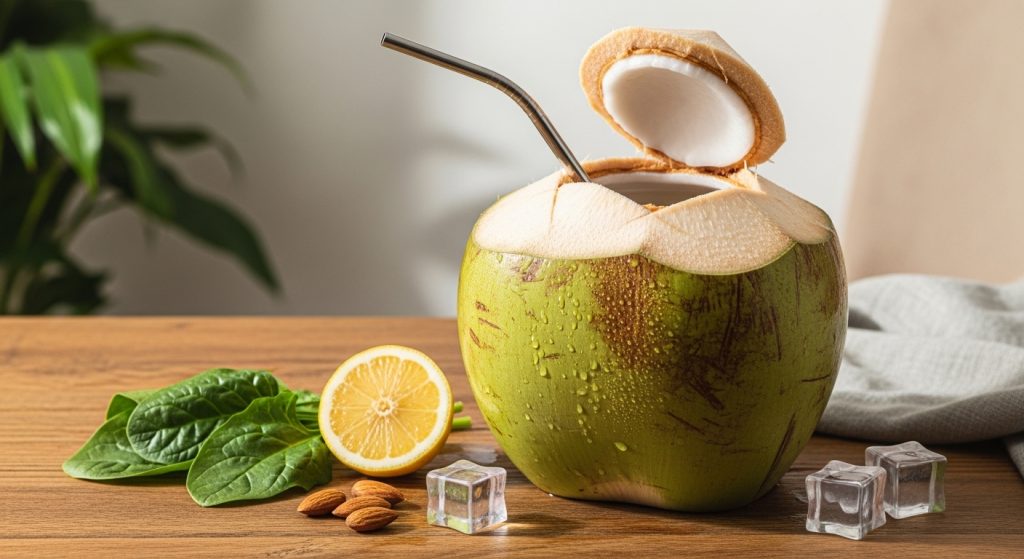
The modern world has amplified conversations around hydration. Fitness culture has expanded globally. Outdoor activities are more common. Travel remains frequent. Rising temperatures in many regions increase the need for fluid replacement.
At the same time, consumers have become more cautious about artificial ingredients and high sugar content. Many are looking for beverages that feel straightforward and minimally processed.
Coconut water fits into that shift without trying too hard.
It does not rely on extreme claims. It does not require dramatic rebranding cycles. Its core appeal has remained consistent: hydration with naturally occurring electrolytes.
That steady relevance is rare.
A Simple Idea That Lasts
Part of coconut water’s enduring appeal may also be psychological. Drinking something that comes directly from a natural, sealed source feels uncomplicated.
The liquid hasn’t been heavily engineered. It hasn’t been artificially coloured. It hasn’t been built from a formula in a lab.
It grew inside a fruit.
That simplicity carries weight in a world that often feels complex and highly processed.
Not because natural always equals better, but because in this case the structure aligns with the function.
Hydration, contained and protected by design.
Final Thoughts
Coconut water has remained globally relevant for centuries because it meets a real and recurring need.
It hydrates. It replenishes electrolytes. It fits into hot climates and active lifestyles. It carries deep cultural roots across multiple continents. It even holds a unique historical footnote from World War II, where in extreme emergencies it reportedly served as a temporary intravenous hydration solution when nothing else was available.
Few beverages can claim that combination of cultural depth, biological compatibility, and practical utility.
Coconut water does not depend on hype to survive. It has endured because the problem it addresses, staying hydrated, is constant.
As long as people move, sweat, travel, and live under the sun, coconut water will remain relevant.
Not as a passing trend, but as a dependable staple.


