

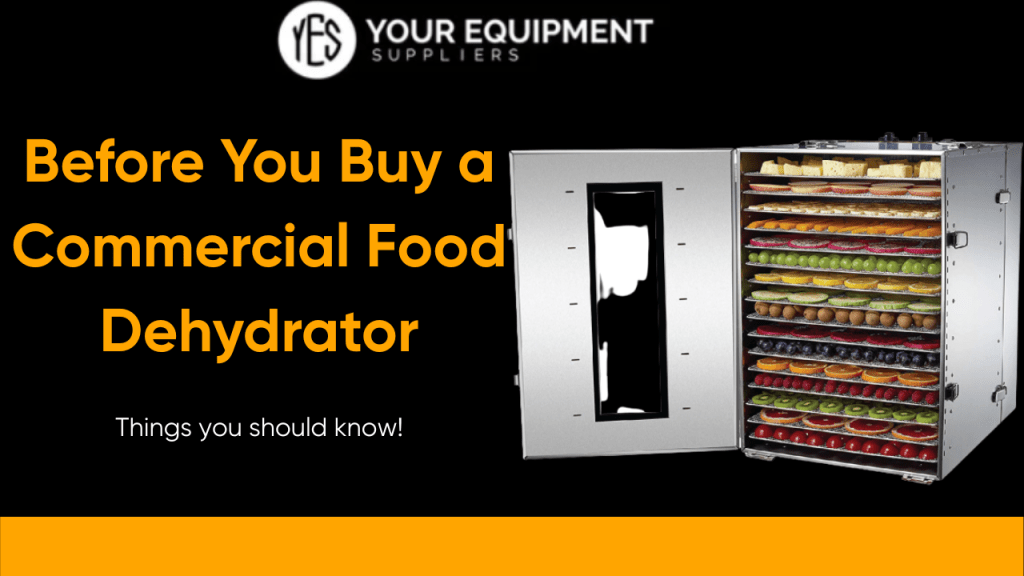
Certification matters. But it is not the whole decision.
Buying a commercial food dehydrator can seem straightforward.
- You compare sizes.
- You compare temperatures.
- You compare prices.
- You check how many trays it holds.
- Then you make a decision.
For many buyers, that is where the process ends.
But a dehydrator is not just a cabinet that blows warm air.
It affects production capacity, product quality, food safety, labour requirements, operating costs, shelf life, and consistency.
That means the real question is not:
“How many trays does it have?”
The better question is:
“Can this dehydrator support the way I need to produce my products?”
That distinction matters more than most people realise.
Who Typically Buys Commercial Dehydrators?
Commercial dehydrators are commonly used by:
- Pepper sauce manufacturers
- Fruit processors
- Herb producers
- Tea manufacturers
- Spice processors
- Snack manufacturers
- Pet treat producers
- Health food brands
- Agricultural producers
- Small food startups
- Export-focused food businesses
While they all use dehydrators, they often require very different drying conditions.
A machine that works well for herbs may not be ideal for fruit.
A machine designed for fruit may struggle with meat products.
A dehydrator suitable for occasional batches may become a bottleneck in a growing production facility.
Why Certification Matters
Certification can be important depending on your business model.
Food manufacturers may need equipment that supports food safety programs, inspections, customer audits, or export requirements.
Certified equipment can provide confidence regarding:
- Electrical safety
- Equipment construction
- Manufacturing standards
- Compliance requirements
- Commercial operation
These factors should absolutely be considered.
But certification only answers one question:
“Is this equipment built to a recognised standard?”
It does not answer:
“Will this equipment perform properly for my product?”
Those are different questions.

A Food Dehydrator Can Be Technically Correct and Still Be the Wrong Machine
This happens frequently. A buyer purchases a dehydrator based on capacity alone.
The machine arrives. Production begins. Then problems appear.
- Drying times are longer than expected.
- Products dry unevenly.
- Certain trays finish before others.
- Staff spend hours rotating trays.
- Production schedules become difficult to predict.
- Product quality becomes inconsistent.
The machine may not be defective; it may simply be the wrong fit.
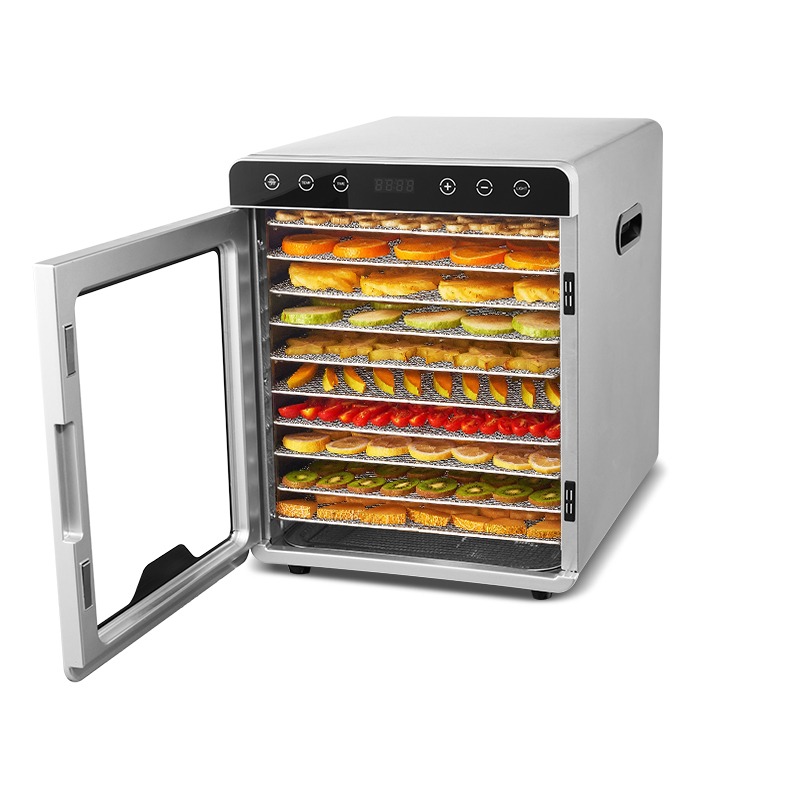
Airflow Matters More than Most Buyers Realise
One of the biggest differences between dehydrators is airflow design. Many buyers focus on tray count, but experienced operators focus on airflow.
Questions to ask:
- Is airflow horizontal or vertical?
- How evenly is air distributed?
- Will trays need to be rotated?
- How consistent is drying from top to bottom?
- How does airflow perform with fully loaded trays?
Poor airflow often creates:
- Uneven drying
- Increased labor
- Product inconsistency
- Longer drying cycles
- Reduced throughput
A dehydrator should dry consistently throughout the cabinet, not just near the heating element.
What Are You Actually Drying?
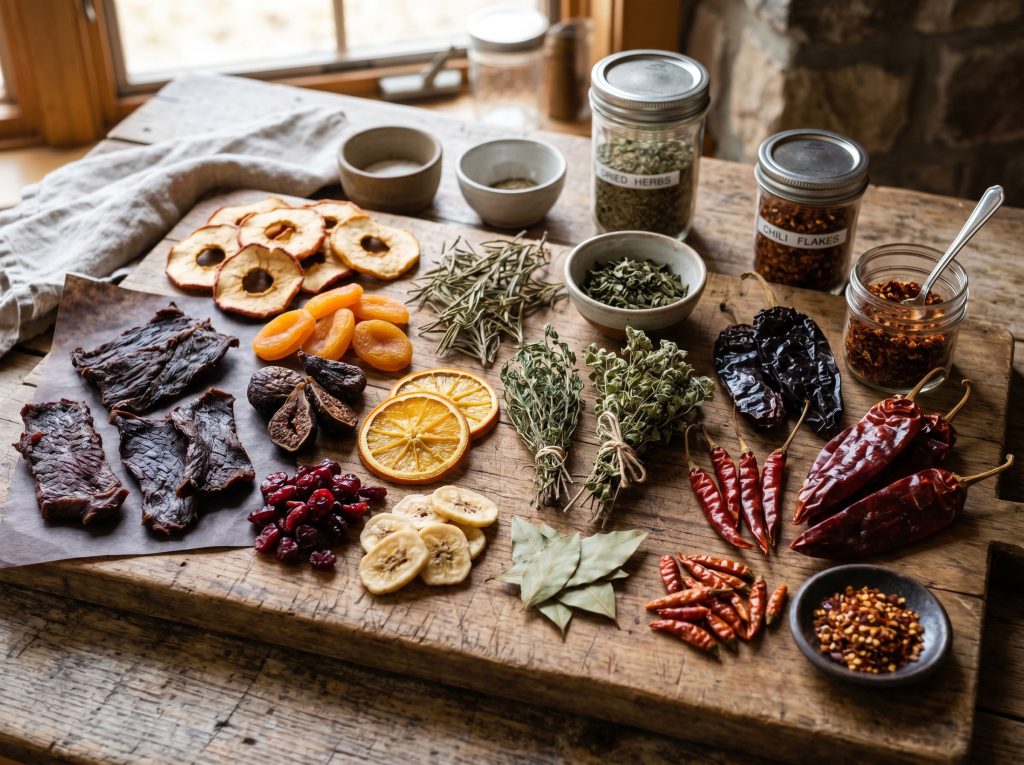
Before choosing a machine, define your product.
Different products behave differently during dehydration.
Fruits
- Mango
- Pineapple
- Banana
- Papaya
- Coconut
These products contain high moisture and sugar levels.
They often require longer drying times and careful temperature control.
Herbs
- Chadon beni
- Thyme
- Oregano
- Basil
- Parsley
Herbs can lose colour, aroma, and potency if temperatures are too high.
Peppers
- Scotch bonnet
- Hot peppers
- Seasoning peppers
Peppers may require specialised handling to preserve colour and flavour.
Meat Products
- Jerky
- Pet treats
- Dried seafood
These products often require stricter food safety considerations.
The ideal dehydrator for one product category may not be ideal for another.
Capacity is More Than Tray Count
Many manufacturers advertise tray quantity.
That number alone can be misleading.
The better questions are:
- How much product fits on each tray?
- What is the usable drying area?
- How much fresh product can be loaded per batch?
- What is the expected yield after drying?
- How many batches can be completed daily?
For example:
100 lbs of fresh fruit does not become 100 lbs of dried fruit. Water loss dramatically reduces finished weight.
Understanding expected yield helps prevent purchasing equipment that is either too large or too small.
Drying Time Affects Profitability
Many businesses underestimate drying time.
A batch that takes:
- 6 hours
- 12 hours
- 18 hours
- 24 hours
can dramatically change production planning.
The faster question is not:
“How hot does the machine get?”
The better question is:
“How much finished product can I produce per day?”
That is what determines capacity.
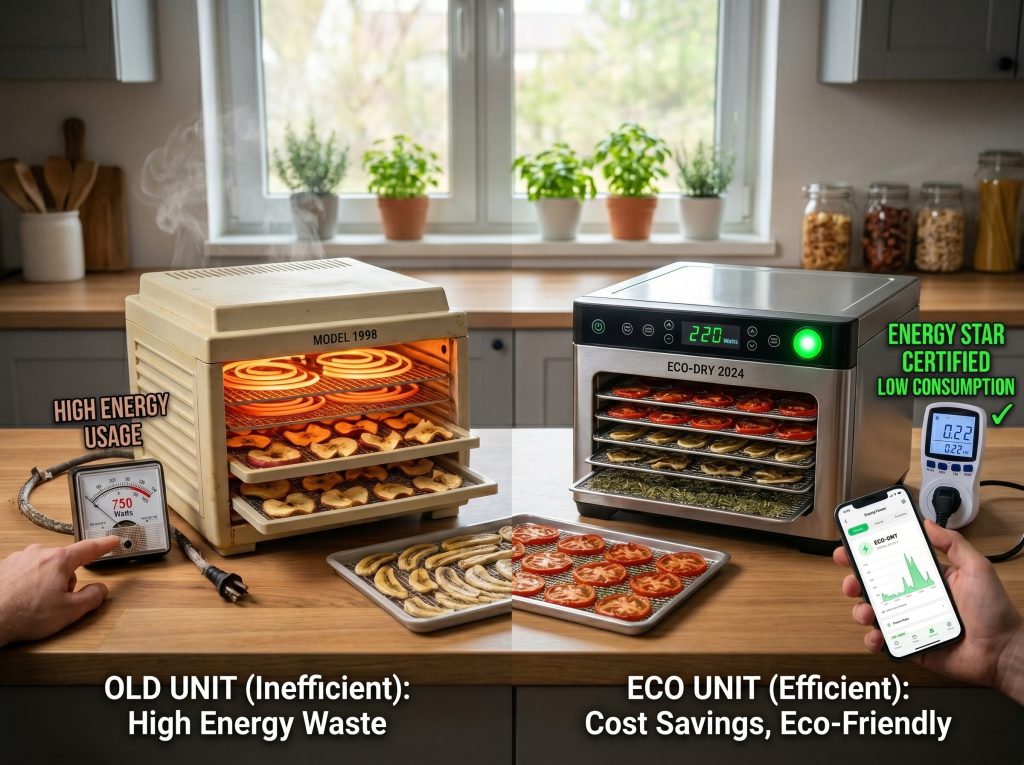
Energy Consumption Matters
A dehydrator may run continuously for many hours.
Operating costs can become significant.
Ask:
- What is the power consumption?
- How many hours will the machine run daily?
- What voltage is required?
- Does my facility support the electrical requirements?
The cheapest machine can become expensive if energy costs are high.
Your Workflow Matters as Much as the Machine
Many dehydration businesses encounter bottlenecks outside the dehydrator itself.
Examples include:
- Washing
- Cutting
- Slicing
- Sorting
- Loading trays
- Packaging
- Labeling
- Storage
If upstream processes are slow, a larger dehydrator may not improve production.
The machine should fit into the entire production workflow.
Cleaning and Sanitation Should Not Be Overlooked
Food safety starts with cleaning.
Ask:
- Are trays easy to remove?
- How easy is cabinet cleaning?
- Are food-contact surfaces accessible?
- What materials are used?
- Are replacement trays available?
Machines that are difficult to clean often create long-term operational headaches.
The Machine is Only One Part of the System
Many buyers focus entirely on equipment, but the more successful businesses focus on systems.
The dehydrator is only one piece of:
- Product preparation
- Drying
- Quality control
- Packaging
- Storage
- Inventory management
- Food safety
- Production scheduling
Without a system, even good equipment can struggle to deliver results.
What Happens After the Dehydrator Arrives?
This is where many buyers need support.
Questions quickly appear:
- What temperature should I use?
- How long should I dry my product?
- Why is drying uneven?
- Why is my product changing colour?
- Why is shelf life inconsistent?
- Why are trays drying differently?
- How should finished products be packaged?
These questions affect profitability just as much as the machine itself.
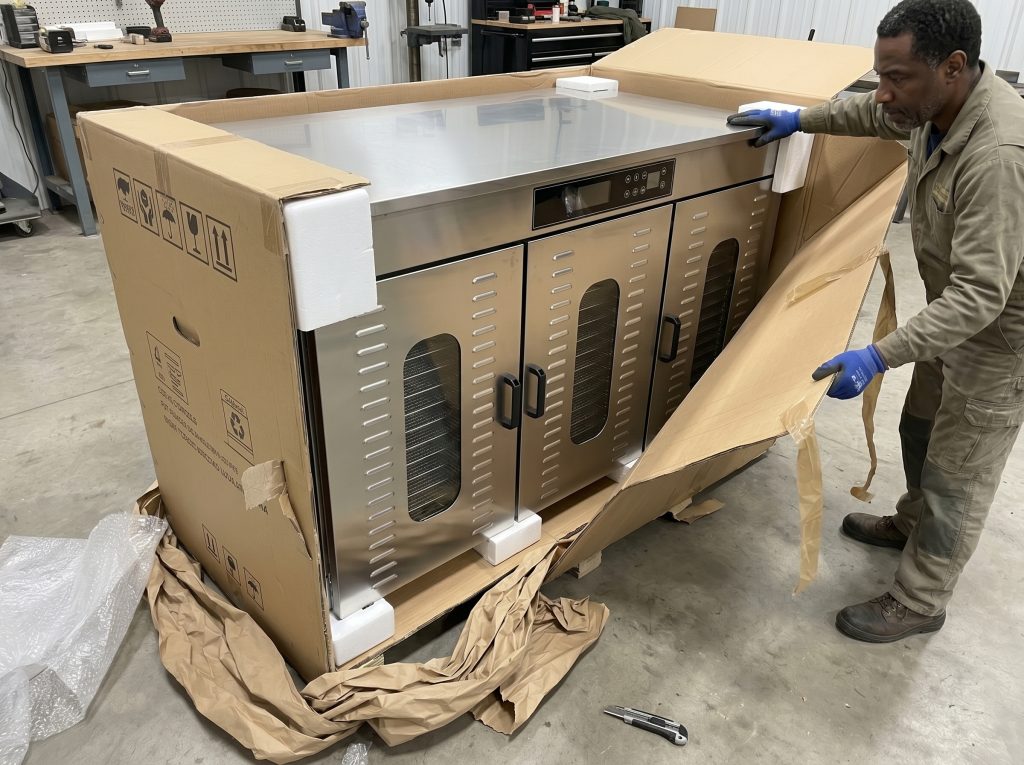
The Machine is Only One Part of What YES Supports
At YES, we do not view a food dehydrator as simply another piece of equipment.
We help businesses think through:
- Product suitability
- Capacity planning
- Workflow design
- Production bottlenecks
- Equipment selection
- Operating practices
- Food processing considerations
Because once the dehydrator arrives, production challenges begin.
The goal is not simply to own a dehydrator.
The goal is to consistently produce a quality product profitably.
Common Mistakes Buyers Make
- Buying based on tray count alone: More trays do not automatically mean higher productivity.
- Ignoring drying time: Long drying cycles can limit output.
- Underestimating future growth: Many businesses outgrow equipment faster than expected.
- Choosing solely on price: Low purchase cost does not always mean low operating cost.
- Ignoring workflow: The dehydrator may not be the actual bottleneck.
- Not considering product type: Different foods require different drying conditions.
Questions to Ask Before Buying a Commercial Food Dehydrator
- What products will I be drying?
- How much product will I process per batch?
- How many batches will I run per day?
- What is my expected production volume in 12 months?
- How consistent is airflow throughout the cabinet?
- What electrical requirements are needed?
- How easy is cleaning and sanitation?
- What support is available after purchase?
- Are replacement parts readily available?
- Does this machine fit my workflow and production goals?
Every food dehydrator is different. The wrong equipment can lead to poor texture, bottlenecks, and unnecessary costs.
Schedule a consultation, and we’ll help determine the right setup based on your product, production volume, sizes, and growth plans.
The Real Decision is Fit
The best dehydrator is not necessarily:
- The biggest
- The cheapest
- The hottest
- The one with the most trays
The best dehydrator is the one that fits:
- Your product
- Your production goals
- Your facility
- Your labour requirements
- Your workflow
- Your growth plans
Because a dehydrator can look impressive on paper and still become a bottleneck in production.
Need help choosing the right commercial food dehydrator?
YES helps food manufacturers, agricultural processors, snack producers, and growing food businesses choose equipment that fits their production goals.
Whether you are drying fruits, herbs, peppers, spices, tea, pet treats, or speciality food products, we help you think beyond tray count and focus on the complete production system.
Talk to YES about finding the right commercial dehydrator for your operation before you invest.
Not sure which dehydrator matches your production goals?


