

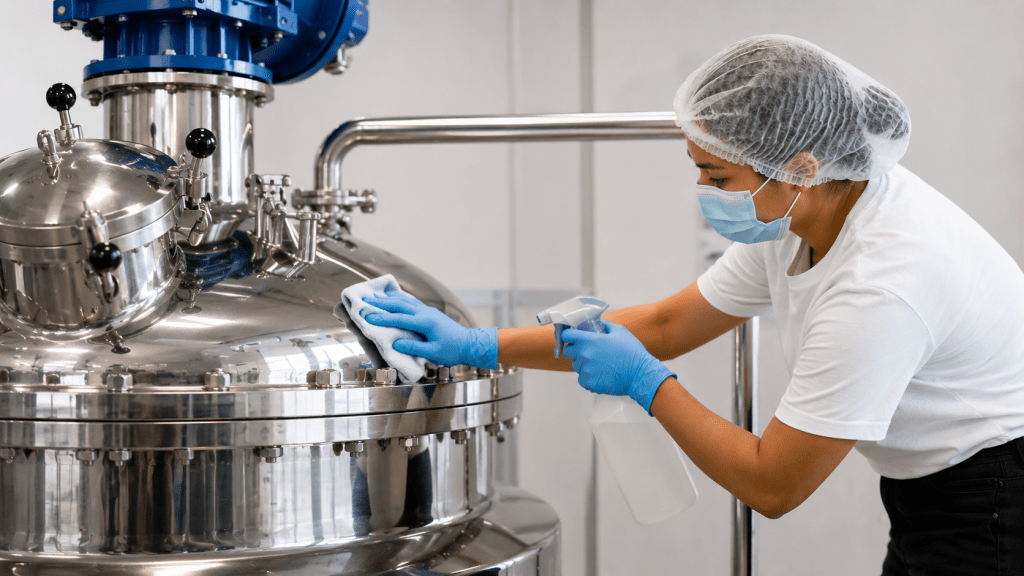
When the last product comes off the line, it can feel like the work is over.
- The order is complete.
- The equipment is switched off.
- The team starts packing up.
- Everyone is already thinking about the next production run.
But there is still one important question to ask:
Have I planned for everything that happens after the last product is made?
A small food manufacturer once found itself losing valuable production time at the end of almost every shift. Nothing was technically wrong with the equipment. The machines were doing exactly what they were supposed to do. The problem was what happened afterwards.
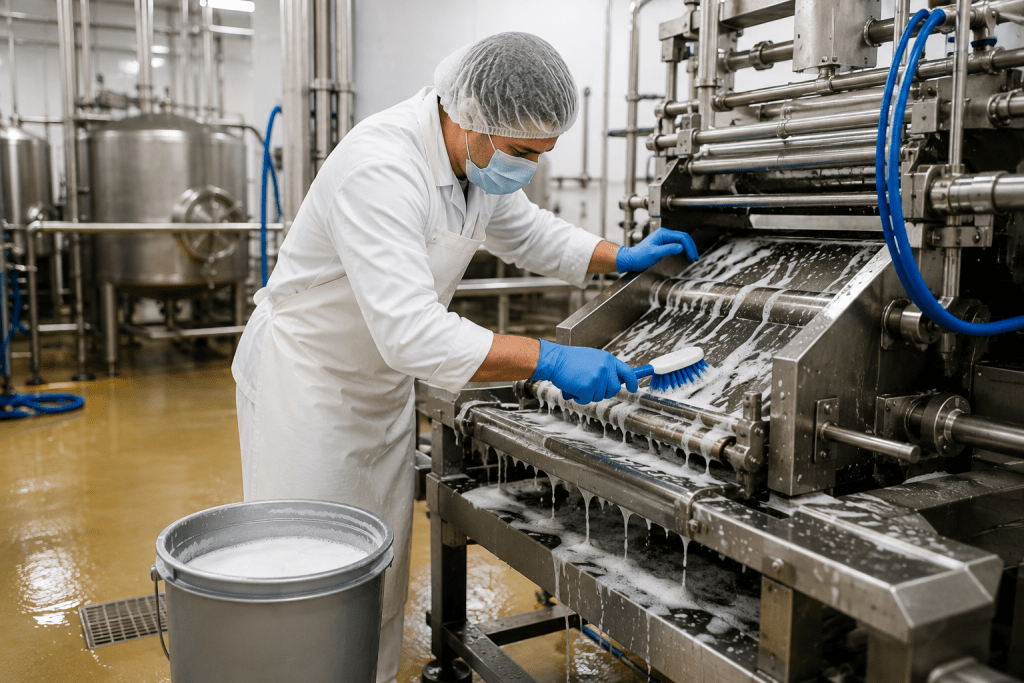
Cleaning took longer than expected. Equipment had to be dismantled. Certain parts needed to be washed separately. Surfaces had to be sanitised. The team then had to put everything back together before the next production run could begin.
Individually, none of these tasks seemed particularly significant. Together, they were creating a bottleneck.
The lesson was simple: production does not end when you make the last product.
The Part of Production That Often Gets Overlooked
When businesses invest in equipment, the conversation naturally focuses on what happens during production.
- How much can it produce?
- How quickly can it produce it?
- How much labour can it save?
- Will it improve consistency?
These are all important questions. But there is another side to equipment performance that deserves just as much attention: what happens when production stops?
Every piece of equipment has a life outside the actual production cycle.
It needs to be cleaned. It may need to be disassembled. Certain components may need special attention. Waste needs to be removed. The surrounding area needs to be cleaned. Some equipment may require inspection or routine maintenance before it is ready for the next run.
If these activities are not considered when choosing equipment, a machine that looks highly efficient on paper may create inefficiencies somewhere else.
That is why cleaning time should not be treated as an afterthought.
Cleaning time is production time.
Why Does Cleaning Time Matter So Much?
Imagine two machines that can both produce 500 units per hour. On paper, they appear to have the same production capacity.
But Machine A takes 20 minutes to clean and reset after a production run, while Machine B takes an hour. If the equipment is used multiple times throughout the day, that difference starts to add up quickly.
The issue is not that either machine is incapable of producing efficiently. The issue is that their total operating efficiency is different.
This is where equipment decisions become more complicated than simply looking at output.
A machine should not only be evaluated based on how well it performs while it is running. You also need to consider the time, labour and resources required to keep it ready to run.
That means asking questions such as:
- How long does cleaning actually take?
- How easily can the equipment be accessed?
- Does it need to be dismantled?
- How many people are required to clean it properly?
- Are there difficult-to-reach areas?
- How long does it take to reassemble?
- Does cleaning require specialised tools or products?
- Can the equipment be cleaned between different products or batches without creating excessive downtime?
These questions may not appear as exciting as production capacity or automation features, but they can have a very real impact on your operation.
What Happens When You Don’t Account for the “After”?
The biggest problem with overlooking cleaning and reset time is that the inefficiency can become invisible. You may not see a large expense on an invoice labelled “cleaning downtime”.
Instead, you see:
- Employees spending longer between production runs.
- Overtime creeping up.
- Production schedules slipping.
- Orders taking longer to complete.
You may even think you need more equipment or additional staff when the real issue is that the existing process takes too long to reset. There can also be operational consequences.
If cleaning is rushed because the team is under pressure to start the next production run, standards can suffer. If equipment is difficult to clean properly, it can create unnecessary hygiene and maintenance concerns. If employees have to repeatedly perform complicated cleaning procedures, it can also make the process more labour-intensive than expected.
In other words, the cost of equipment is not limited to the purchase price.
There is a cost associated with operating it, maintaining it, cleaning it and getting it ready for the next job.
Think About the Full Production Cycle
Better equipment decisions come from looking at the entire process rather than a single stage.
Instead of asking:
“How much can this machine produce?”
Ask:
“What does the entire production cycle look like with this machine?”
That cycle might look something like:
Setup → Production → Shutdown → Cleaning → Inspection → Reassembly → Reset → Production again
Every stage takes time.
If you only optimise the production stage, you may improve one part of the process while creating a bottleneck somewhere else.
This is especially important as a business grows. A cleaning process that is manageable when you are producing a few batches a day may become a serious constraint when production volume increases.
The equipment that worked perfectly at one stage of the business may no longer be the right fit for the next stage.
That does not necessarily mean you chose the wrong equipment. It means your equipment needs to be evaluated against the reality of your operation.
The Questions to Ask Before You Buy
Before investing in new equipment, take the time to understand what happens before, during and after production.
- Speak to the people who will actually use and clean the equipment. They may notice practical challenges that are not obvious from a specification sheet.
- Ask the supplier about cleaning procedures, maintenance requirements and accessibility. Find out how the equipment is designed to be cleaned and how long typical cleaning and changeover processes take.
- Most importantly, don’t only calculate how much product the equipment can make.
Calculate how much usable production time you will actually get from it. A machine that produces quickly but takes excessive time to clean, maintain and reset may not deliver the efficiency you expect.
Better Equipment Decisions Look Beyond the Machine
Equipment should support your entire operation, not just the moment when the product is being made.
That means thinking about the people using it, the space around it, the maintenance it requires, the cleaning process and what needs to happen before production can begin again.
The goal is not simply to buy equipment that can produce more; it is to build a process that allows your business to produce more efficiently, consistently, and sustainably.
So the next time you are evaluating a piece of equipment, don’t stop at:
“How much can it produce?”
Ask one more question:
“What happens after the last product is made?”
The answer could have a bigger impact on your operation than you expect.


