

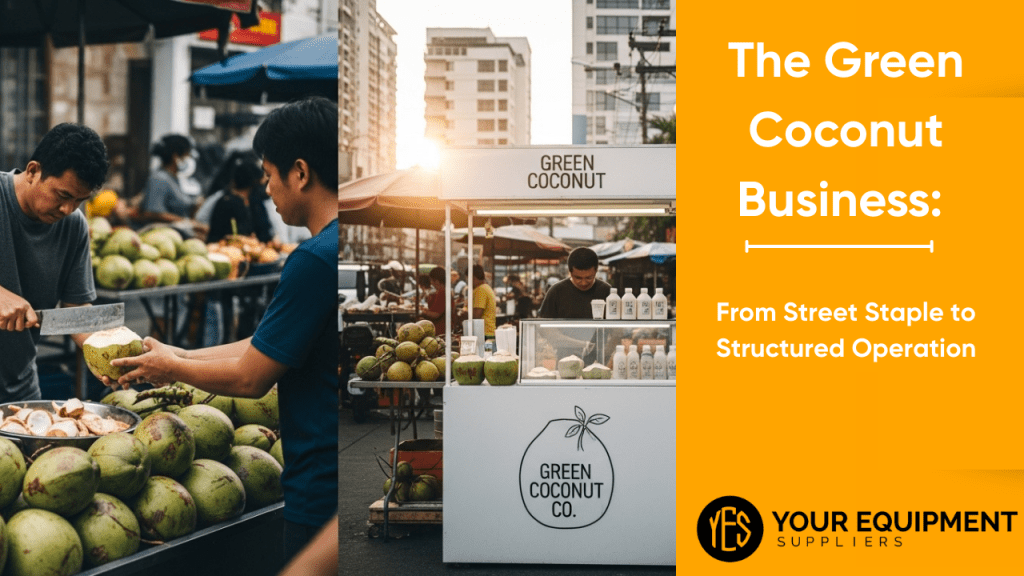
Green coconuts have always been there; stacked on roadside stalls, cracked open with a machete, handed over ice-cold on a humid afternoon. What’s changed isn’t the fruit. It’s the structure around it.
What used to be informal, labour-intensive, and inconsistent is increasingly becoming organised, efficient, and scalable. That shift matters.
The difference between a person selling coconuts and a coconut business isn’t enthusiasm. It’s workflow.
From Manual Hustle to Managed Process
Traditionally, green coconut sales rely on three manual steps: peel, open, serve. Simple in theory. Exhausting in practice.
Manual peeling is slow and inconsistent. Opening can be risky and uneven. Filling or transferring coconut water into containers introduces hygiene issues and waste. The product may be good, but the operation struggles to scale.
A structured setup changes that. When peeling, opening, and filling are treated as distinct processing stages rather than improvised tasks, output stabilises. Labour strain drops. Waste reduces. The business becomes predictable instead of reactive.
Predictability is what allows growth.
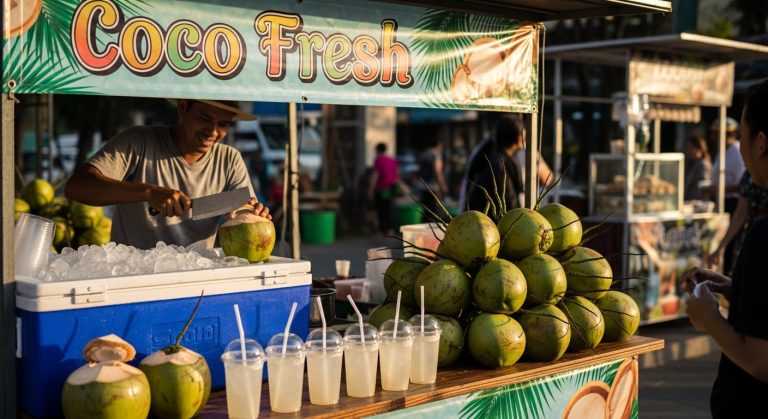
Why Coconut Water Continues to Hold Its Ground
Coconut water isn’t trending in the way neon drinks trend. It’s persistent. That’s different.
Consumers gravitate toward drinks that feel natural, minimally processed, and hydrating without being overloaded with additives. Coconut water quietly fits that profile. It crosses categories; street refreshment, gym hydration, hotel welcome drink, café offering, packaged retail beverage.
Its strength lies in versatility. It can be served fresh from the shell, poured into takeaway cups, bottled under a private label, or blended into flavoured variations.
The fruit doesn’t need reinvention. The system around it does.
The Operational Gap Most People Ignore
Many aspiring operators underestimate the operational bottleneck. They focus on demand. “People love coconut water.” True. But love doesn’t fix inefficiency.
The real friction appears in throughput:
• How many coconuts can be peeled per hour without exhausting staff?
• How uniform are the openings?
• How much liquid is lost during transfer?
• How hygienic is the filling stage if the product is packaged?
When these variables fluctuate, margins fluctuate. And unstable margins quietly erode confidence.
A structured bundle of peeling, opening, and liquid filling equipment addresses that gap not by adding complexity, but by standardising the sequence. Each stage becomes repeatable. Repeatability is where professionalism begins.

From Stall to Scalable Model
There are roughly three evolutionary stages in coconut operations.
Stage one: the informal vendor. Labour heavy. Cash-based. Limited volume.
Stage two: the organised local operator. Cleaner cuts, faster service, more consistent presentation. Higher foot traffic handled with less chaos.
Stage three: the small processor. Coconut water is filled into bottles or pouches. Branding enters the equation. Distribution becomes possible.
The interesting part is that the fruit remains the same across all stages. The shift happens in processing control.
Hygiene, Presentation, and Perception
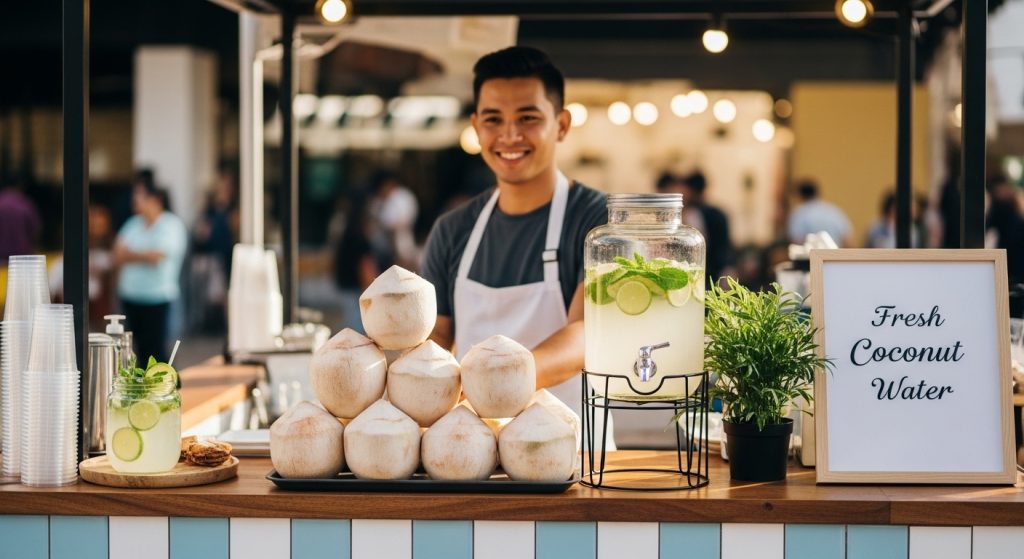
Food businesses operate on perception as much as taste. Clean cuts, consistent presentation, and drip-free filling subtly signal professionalism.
Consumers may not consciously analyse workflow efficiency, but they notice neatness. They notice uniformity. They notice when a drink feels handled with care rather than improvised.
In packaged formats, hygiene isn’t optional; it’s foundational. A filling system designed for food-grade liquids reduces contamination risk and improves shelf stability. That’s not glamorous. It’s necessary.

The Quiet Advantage of Workflow Thinking
There’s a cognitive shift here. Instead of asking, “How do I sell coconuts?” the more strategic question becomes, “How do I design a coconut processing flow?”
That framing changes everything.
When peeling feeds opening, and opening feeds filling, and filling feeds either direct service or packaging, the business becomes modular. Modular systems scale. Improvised systems stall.
The coconut industry doesn’t need hype. It needs operators who understand that even simple products benefit from deliberate structure.
The Bigger Picture
Green coconuts are abundant in many regions. Demand for natural hydration isn’t vanishing. Entry barriers remain relatively low compared to other beverage categories.
The opportunity isn’t in novelty flavours or aesthetic gimmicks. It’s in execution. Efficient preparation. Clean presentation. Controlled filling. Consistent output.
Sometimes the most durable business ideas aren’t the loudest. They’re the ones hiding in plain sight, waiting for someone to treat them like systems instead of side hustles.The humble green coconut might look unchanged from the outside. The real innovation is happening in how it’s handled.
Planning a coconut operation? Our team can help you estimate equipment ROI and structure a smarter investment path.
Listen to our podcast below for more information.


