

The fastest packaging machine does not always mean the best packaging decision.
Buying a Vertical Form Fill & Seal (VFFS) machine can seem straightforward.
- You compare prices.
- You compare packaging speeds.
- You compare bag sizes.
- You look at machine photos and videos.
- Then you choose a machine.
That is how many businesses start.
But a VFFS machine is not just another piece of equipment. Once it enters your operation, it affects production capacity, labour requirements, packaging consistency, material usage, sealing quality, product waste, and ultimately profitability. That’s why you should never buy a VFFS machine based on speed alone. A faster machine can still be the wrong machine.
The real question is not:
“How many bags can this machine produce per minute?”
The better question is:
“Can this machine support the way my business actually produces, fills, and packages products?”
That is where many businesses make costly mistakes.
Packaging Speed Matters. But It Isn’t the Whole Decision.
One of the first specifications buyers look at is output.
Manufacturers mainly advertise:
- Bags per minute
- Bags per hour
- Filling capacity
- Bag-making speed
- Automatic versus semi-automatic operation
Those numbers are important. If demand is increasing, packaging bottlenecks can limit growth.
A VFFS machine can help:
- Increase packaging output
- Reduce manual labour
- Improve packaging consistency
- Reduce repetitive work
- Improve bag presentation
- Reduce packaging bottlenecks
- Support business growth
But speed alone does not guarantee success.
A machine may produce hundreds or thousands of bags per hour and still be completely wrong for your operation, because production is about more than output; it is about fit.
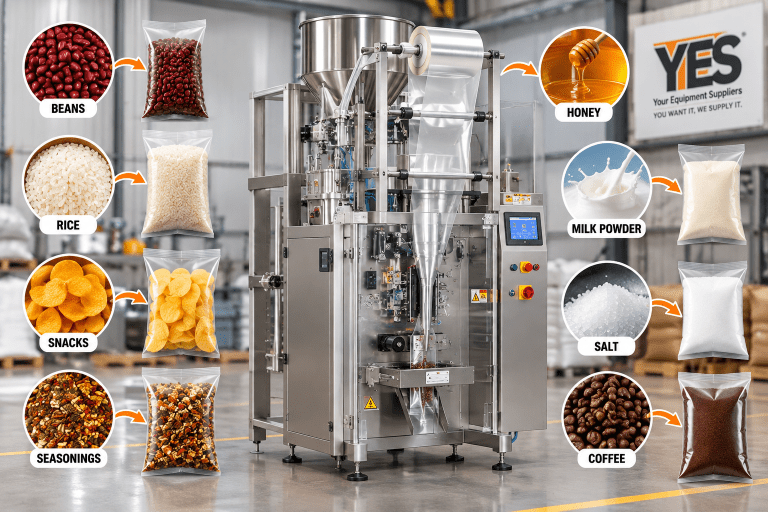
Your Product Determines the Filling System
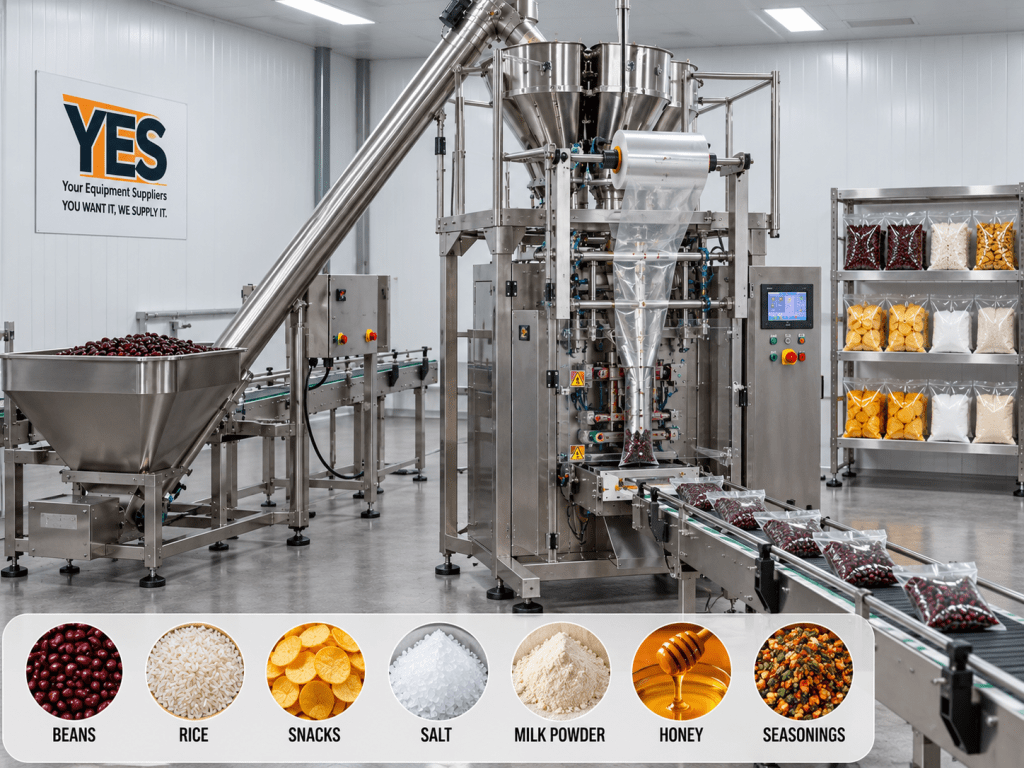
A VFFS machine may package many different products, but the filling system needs to match what you are producing.
Consider products such as:
- Rice
- Flour
- Sugar
- Spices
- Seasonings
- Grains
- Nuts
- Seeds
- Snacks
- Powdered products
These products can have very different characteristics.
- Flowability matters.
- Particle size matters.
- Density matters.
- Moisture content matters.
Before buying, ask:
- What products will I package?
- Are they powders, granules or solid products?
- Do they flow consistently?
- Do they contain different particle sizes?
- Will I package multiple products?
The filling system should be selected around the product rather than treated as an afterthought.
Your Packaging Film Matters
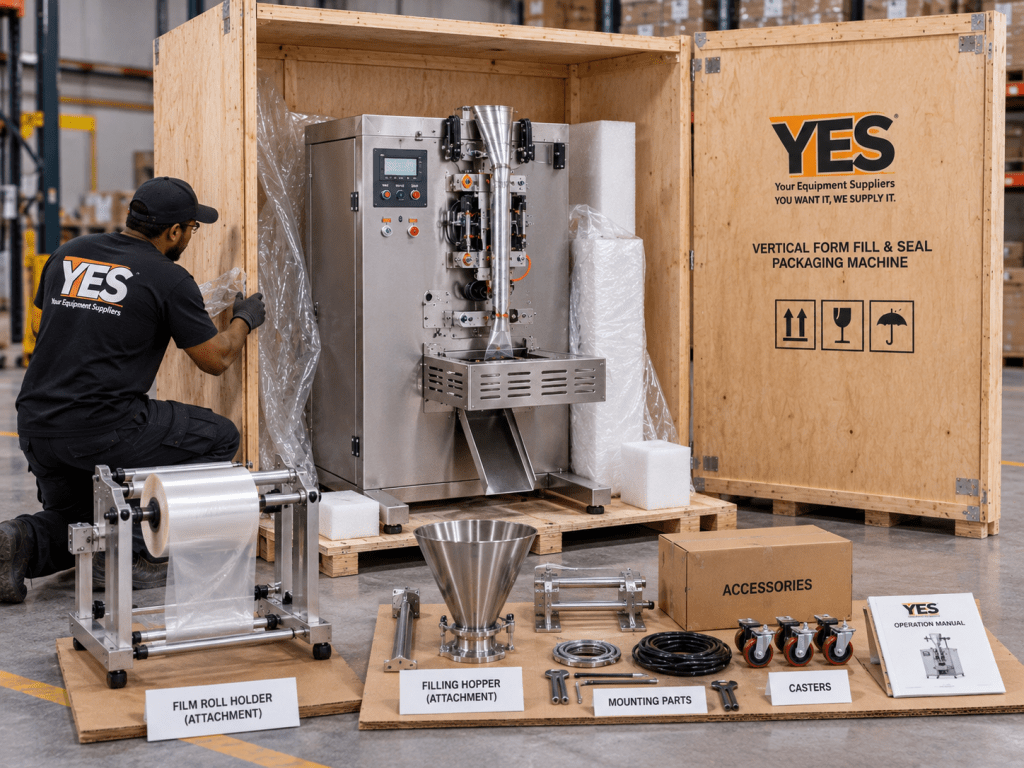
The VFFS machine and packaging film have to work together.
The machine forms bags from a roll of flexible film, fills them and seals them. The characteristics of that film can affect how smoothly the machine operates.
Before buying, consider:
- Film width
- Film thickness
- Film type
- Sealing characteristics
- Printed versus unprinted film
- Required bag dimensions
Unsuitable film can contribute to poor sealing, film-tracking issues, inconsistent bags and unnecessary material waste. Ask what film specifications the machine requires before making your packaging-material investment.
Bag Size and Format Affect Machine Selection
Your finished package should be considered before you choose the machine.
Ask yourself:
- What bag sizes will I produce?
- What weight will each bag contain?
- What bag width and length do I need?
- Will I produce different sizes?
- Will I change packaging formats?
- Do I need printed packaging?
A business that packages small spice packets has very different requirements from one packaging rice, grains or other bulk products. If you plan to run several bag sizes, make sure the machine can accommodate them without excessive adjustment or changeover time.
Sealing Quality Protects the Finished Product
A properly formed bag still needs a reliable seal.
Sealing quality affects:
- Product protection
- Package appearance
- Leakage prevention
- Packaging consistency
- Customer experience
Poor sealing can result in:
- Open bags
- Product leakage
- Damaged packaging
- Increased waste
- Customer complaints
The appropriate sealing configuration depends on the product, film and packaging requirements. Before purchasing, confirm that the machine’s sealing system is suitable for the packaging material you intend to use.
Changeover Time Can Eat Into Production
If you package multiple products or bag sizes, changeover time becomes important.
Changing between products may involve:
- Cleaning
- Film changes
- Filling adjustments
- Bag-length adjustments
- Temperature adjustments
- Testing
A machine may have a high maximum speed but still deliver less output if your team spends significant time stopping production for adjustments.
When comparing machines, ask not only:
“How fast does it run?”
Also ask:
“How easily can we change between the products and package sizes we actually produce?”

Accuracy Affects Your Margins
Packaging accuracy directly affects how much product leaves your facility.
If you are selling a product in 500-gram bags and consistently overfill each package, you are giving away product that you have already paid to produce.
For example, an additional 5 grams in every bag across 10,000 bags equals 50 kg of additional product.
Accurate filling helps:
- Reduce product giveaway
- Control waste
- Protect margins
- Maintain package specifications
- Improve consistency
The goal is not simply to package more bags. It is to package the correct amount in every bag.
Cleaning and Maintenance Matter
Packaging equipment needs to be cleaned and maintained as part of normal production.
Before buying, find out:
- How easy is the machine to clean?
- Which parts require regular cleaning?
- How easily can product-contact areas be accessed?
- What routine maintenance is required?
- Which components are considered wear parts?
- Are spare parts available?
This is particularly important when packaging food products such as spices, flour, seasonings and other products that can leave residue inside the equipment.
A machine that is difficult to clean or maintain can increase downtime and labour requirements.
Your Production Volume Should Guide the Investment
Not every business needs the same level of packaging automation.
A startup producing small batches has different requirements from an established manufacturer supplying supermarkets or distributors.
Consider:
- How many bags do you currently produce?
- How much do you expect production to increase?
- How many hours will the machine operate each day?
- How many products or SKUs will you run?
- Is production seasonal?
- Are you packaging for your own brand or other businesses?
Buying more capacity than you can use can tie up capital, while buying too little capacity can create a bottleneck. Your machine should reflect both your current requirements and your realistic growth plans.
Workflow Determines Your Actual Output
A VFFS machine does not operate in isolation.
Your packaging process may include:
- Product preparation
- Processing
- Storage
- Feeding
- Filling
- Bag forming
- Sealing
- Coding
- Labelling
- Cartoning
- Storage
- Shipping
If one part of the process is significantly slower than the others, it can limit your overall production.
For example, a VFFS machine may be capable of producing 40 bags per minute, but if your product-feeding system can only supply enough product for 20 bags per minute, the additional machine capacity cannot be fully utilised.
Before investing, look at the entire production flow, not just the machine.
Training Affects Performance
Automation does not remove the need for trained operators.
Your team needs to understand:
- Machine setup
- Film installation
- Filling adjustments
- Bag-length settings
- Sealing temperatures
- Cleaning procedures
- Basic maintenance
- Troubleshooting
Proper training can help operators identify problems early, make adjustments correctly and keep production moving. The machine is only one part of a successful packaging operation.
The Machine Is Only One Part of What YES Supports
At YES, we don’t view a VFFS machine as a standalone purchase.
Equipment selection should take into account the product, packaging requirements, production volume and workflow.
Businesses may also need guidance with:
- Equipment selection
- Filling systems
- Packaging requirements
- Capacity planning
- Production workflow
- Operator training
- Cleaning procedures
- Basic maintenance
- Troubleshooting support
Because once the machine arrives, the real work begins.
The goal is not simply to put equipment in your facility.
It is to help you understand how that equipment fits into your operation.
Cheap Equipment Can Become Expensive
Purchase price is important, but it is not the only cost to consider.
The total cost of ownership can include:
- Installation
- Spare parts
- Maintenance
- Downtime
- Labour
- Product waste
- Packaging-film waste
- Training
- Lost production
A machine with a lower purchase price can become expensive if it creates frequent downtime, excessive waste or difficult maintenance. When comparing equipment, consider the total value of the machine over its working life, not just the price on the quotation.
Questions to Ask Before Buying a VFFS Machine
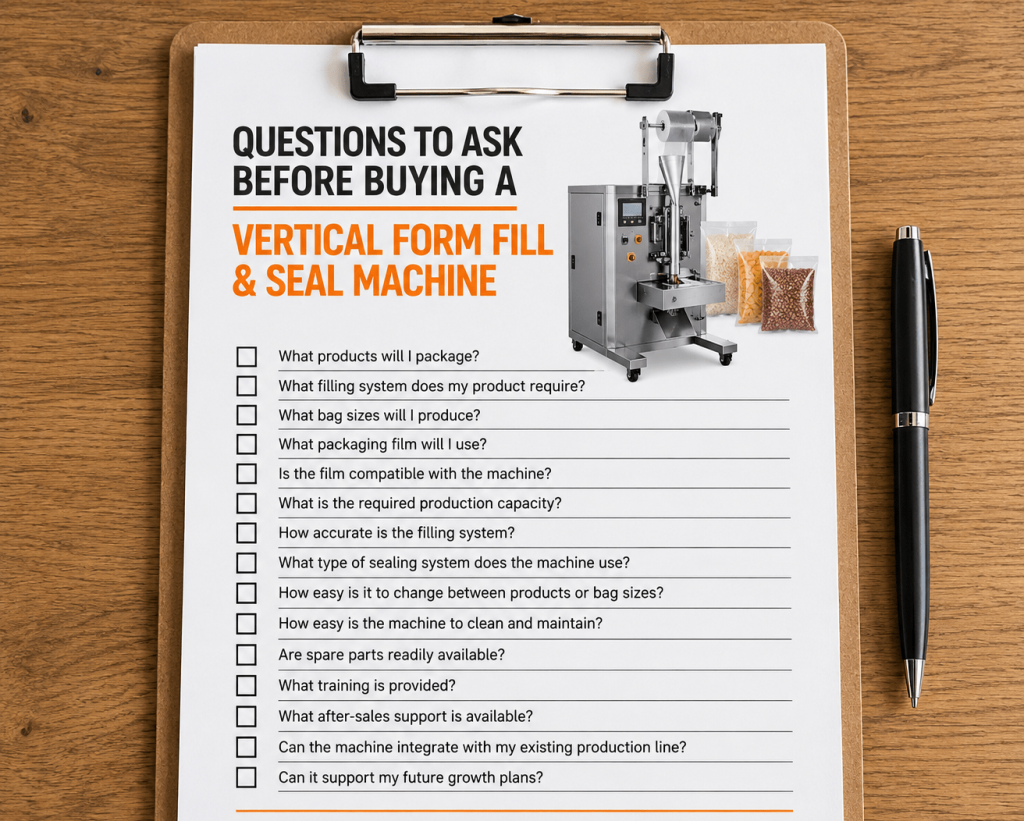
- What products will I package?
- What filling system does my product require?
- What production volume do I actually need?
- What bag sizes will I produce?
- What packaging film will I use?
- Is the film compatible with the machine?
- What sealing system does the machine use?
- How accurate is the filling system?
- How easily can I change products or bag sizes?
- How easy is the machine to clean?
- What maintenance is required?
- Are spare parts available?
- What training is provided?
- What technical support is available after purchase?
- Can the machine integrate with my existing workflow?
- Can it support my expected growth?
Training & Support
Purchasing equipment is only part of the process.
Proper setup, operation and maintenance are important for achieving consistent production and maximising productivity.
We provide guidance on:
- Equipment selection
- Machine operation
- Production workflow
- Cleaning procedures
- Basic maintenance
- Troubleshooting support
This helps reduce startup challenges and gives your team a clearer understanding of how to operate and maintain the equipment.
The Real Decision Is Fit
The right VFFS machine is not necessarily:
- The fastest
- The biggest
- The cheapest
- The most automated
It is the machine that fits your:
- Product
- Filling requirements
- Packaging film
- Bag sizes
- Production volume
- Workflow
- Staff
- Budget
- Growth plans
Speed matters. But fit matters more.
Need help selecting the right VFFS machine to complete the production line?
Before You Buy, Look Beyond the Packaging Speed
A VFFS machine can improve your packaging operation, but the machine itself is only one part of the equation.
- Your product has to work with the filling system.
- Your film has to work with the machine.
- Your bags have to meet your packaging requirements.
- Your seals have to be reliable.
- Your operators have to understand the equipment.
- Your workflow has to support the machine’s capacity.
That is why buying a VFFS machine should be treated as a production decision, not simply an equipment purchase.
Before you buy, look beyond bags per minute; look at how the machine will actually work inside your business.
Need help choosing the right VFFS machine?
YES helps food manufacturers, processors, packaging businesses and growing production operations select equipment that fits their products, packaging requirements and production goals.
From equipment selection and workflow planning to training and operational support, we help businesses make informed equipment decisions before they invest.
Talk to YES about VFFS machines, packaging systems and equipment solutions that fit your business.
Every ingredient functions differently under the same conditions. The wrong equipment can lead to poor texture, bottlenecks, and unnecessary costs.
Schedule a consultation, and we’ll help determine the right setup based on your recipe, production volume, bottle sizes, and growth plans.


