

Client Snapshot
Business: Waking Up Agriculture
Owner: Brandon Abrahams
Location: Operating Nationwide
Business Type: Food Production, Sweet Potato Fries
YES Equipment
- Sweet Potato Peeler
- Sweet Potato Cutter
- Vacuum Sealer
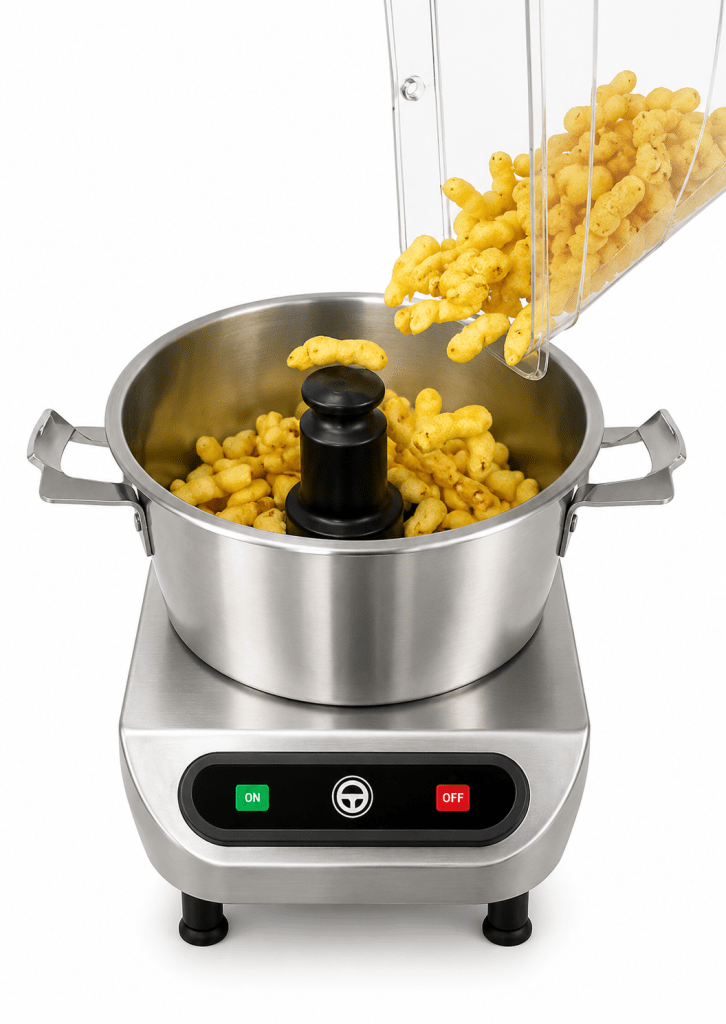
- Food Processor
The sweet potato fries operation paused. The trust in the supplier did not.
Waking Up Agriculture invested in equipment to move away from long, manual production days and prepare the business for growth; however, the result was not the straightforward success story Brandon expected.
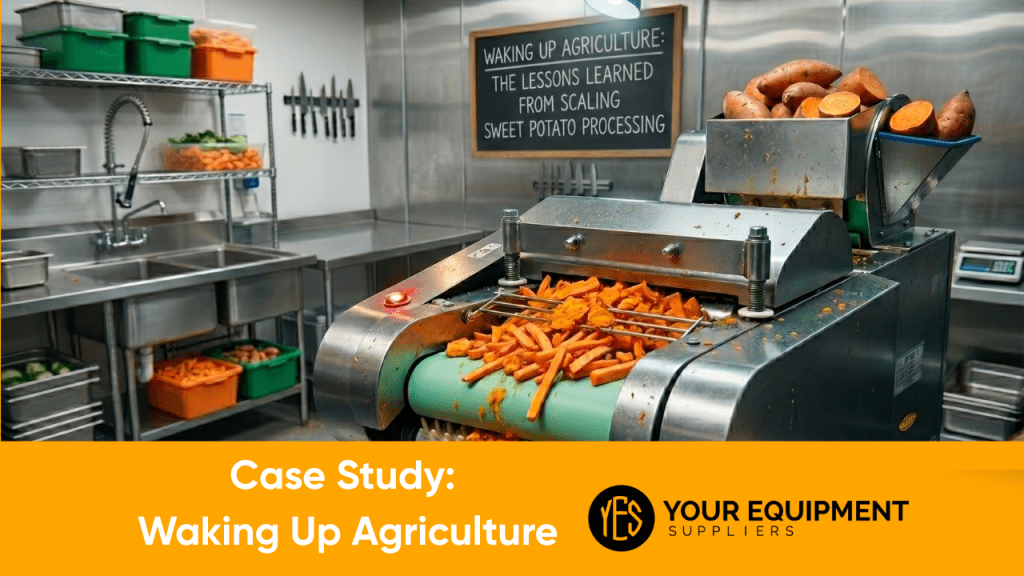
The sweet potato cutter could perform the general function, but the rotating cutting action was not well suited to the hardness, size variation and maturity of the sweet potatoes being processed.
This increased breakage, handling time and rejected product.
However, this is only one part of the story.
The original purchase was made approximately six years ago. Since then, Brandon has remained a customer of Your Equipment Suppliers, continued purchasing buckets for his nursery operations and referred at least 12 other customers to the company.
One equipment application did not deliver the expected result, but the customer relationship still lasted.
The Story in Numbers
| Measure | Result |
|---|---|
| Manual production time before equipment | Approximately 10 to 14 hours per production day |
| Equipment included in the original order | 4 pieces |
| Time since the original purchase | Approximately 6 years |
| Customers referred to YES by Brandon | At least 12 |
| Relationship after the equipment challenge | Still an active YES customer |
| Business relationship today | Expanded from processing equipment to nursery supplies |
1. BEFORE → AFTER TRANSFORMATION
This is not a traditional before-and-after story where a machine immediately reduced production time and increased output.
It is a story about what happens when a business attempts to scale, discovers that a machine is not the right match for its exact raw material, and uses that experience to make better decisions.
Before investing in equipment, Brandon was handling most of the sweet potato fries production process manually. This included preparing the potatoes, cutting them and placing the finished product into bags. Production days could extend to approximately 10-14 hours.
The intention behind the equipment purchase was reasonable:
Reduce manual labour, improve consistency and create enough capacity to grow.
The equipment investment did not produce the expected improvement because the sweet potato cutter struggled with the particular sweet potatoes being processed.
Still, the experience provided valuable information about raw material variation, cutting methods and the questions that must be answered before selecting equipment.
| BEFORE | AFTER THE EXPERIENCE |
| Production completed mainly by hand | Better understanding of equipment compatibility |
| Approximately 10 to 14-hour production days | Clearer view of what a suitable cutting system requires |
| Heavy owner involvement | Greater awareness of raw material variation |
| Inconsistent manual output | Real-world testing of the production process |
| Limited capacity to grow | Better questions for future equipment investments |
| Equipment selected by general function | Stronger focus on the exact product and application |
The operational result was difficult, but the knowledge gained was useful. More importantly for YES, the relationship survived the difficult outcome.
2. MARKET CONTEXT: WHY THIS MATTERS
Sweet potato fries appear straightforward at a small scale. The potatoes are peeled, cut, prepared, packaged and eventually fried.
At a commercial level, the process becomes far more complicated. Sweet potatoes are agricultural products. They do not arrive in perfectly standard sizes, shapes or levels of maturity.
They can vary in:
- Size
- Shape
- Variety
- Hardness
- Maturity
- Fibre structure
- Moisture content
These differences affect how the potatoes move through peeling and cutting equipment.
A cutter that performs well with Irish potatoes or a softer, more uniform product may not produce the same result with harder sweet potatoes. This is one of the realities agro-processors face when moving from manual production to mechanised production.
- The machine description may sound correct.
- The capacity may look sufficient.
- The blades may produce the required fry size.
But the real question is whether the machine can handle the exact raw material available to that business.
For Waking Up Agriculture, this distinction only became fully clear during production.
3. THE BUSINESS PROBLEM: MANUAL PRODUCTION WAS LIMITING GROWTH
Before purchasing equipment, the process depended heavily on Brandon.
The sweet potatoes were prepared by hand, cut by hand, and placed into bags by hand.
This created several challenges:
- Long production days
- Heavy physical labour
- Inconsistent output
- Limited production capacity
- Little time for sales or business development
- Dependence on one person to keep production moving
Brandon identified inconsistency as one of the main difficulties. Even when demand existed, the manual process made it difficult to increase output without increasing working hours and physical strain.
| MANUAL PRODUCTION | DESIRED RESULT |
| Approximately 10 to 14-hour production days | Shorter processing time |
| Manual peeling and cutting | Reduced physical labour |
| Variation in fry sizes | More consistent output |
| Limited daily capacity | Ability to accept more orders |
| Manual packaging | Better packaging and preservation |
| Owner required at every stage | More time to manage the business |
The need for equipment was clear.
The challenge was finding equipment that matched the raw material and the full production process.
4. THE BOTTLENECK: PRODUCT COMPATIBILITY
The main equipment issue concerned the sweet potato cutter.
The cutter was capable of producing fries, but the rotating cutting action was not ideally suited to the sweet potatoes Waking Up Agriculture was using. Sweet potatoes can be harder than Irish potatoes and can vary significantly from one batch to another.
As the potatoes moved through the cutter, Brandon experienced:
- Increased product breakage
- More rejected pieces
- Additional sorting
- More manual intervention
- Reduced usable yield
- Longer processing time
- Lower consistency in the finished product
Instead of simply placing potatoes into the machine and receiving uniform fries, Brandon still had to intervene throughout the process.
The harder and less uniform the potato, the more force was required, which increased the likelihood of breakage.
CHALLENGE | PRODUCTION IMPACT |
| Hard sweet potato varieties | Increased cutting resistance |
| Variation in size and shape | Inconsistent processing |
| Rotating cutting action | Greater product breakage |
| Higher breakage levels | More rejected product |
| Additional sorting and handling | Longer production time |
| Continued manual intervention | Reduced labour savings |
Brandon also explored blanching the sweet potatoes before cutting them, intending to soften the potatoes and make them easier to process. However, this created another difficulty.
When the blanched fries were cooked, they absorbed more oil than desired. Solving the cutting issue in that way affected the quality of the final product.
The machine was not necessarily defective; it just wasn’t the right match for that particular sweet potato variety, condition and production method.
That distinction matters.
5. YES EQUIPMENT STACK
Waking Up Agriculture purchased four pieces of equipment to support different stages of production.
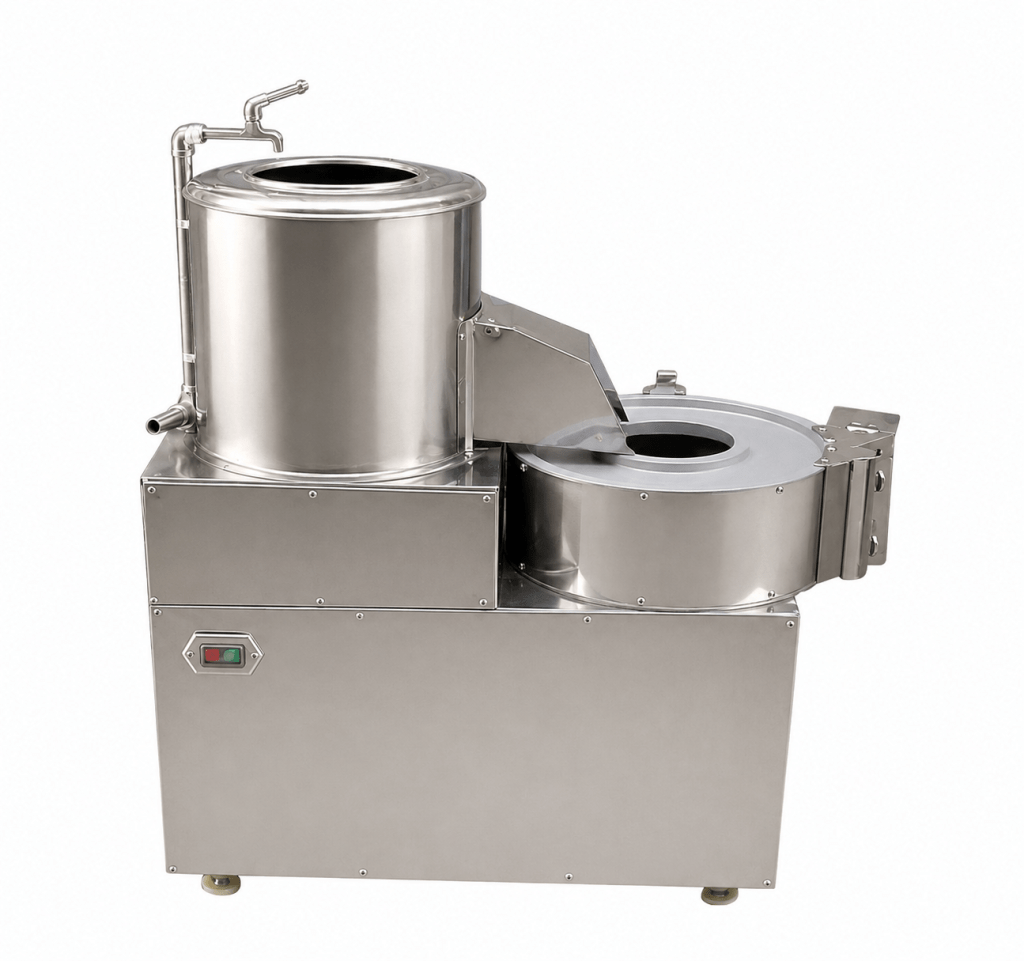
Sweet Potato Peeler
The peeler was intended to reduce the time and labour required to prepare the raw sweet potatoes.
The expected benefits included:
- Reduced manual peeling
- Faster preparation
- Less repetitive work
- Improved batch-processing capacity
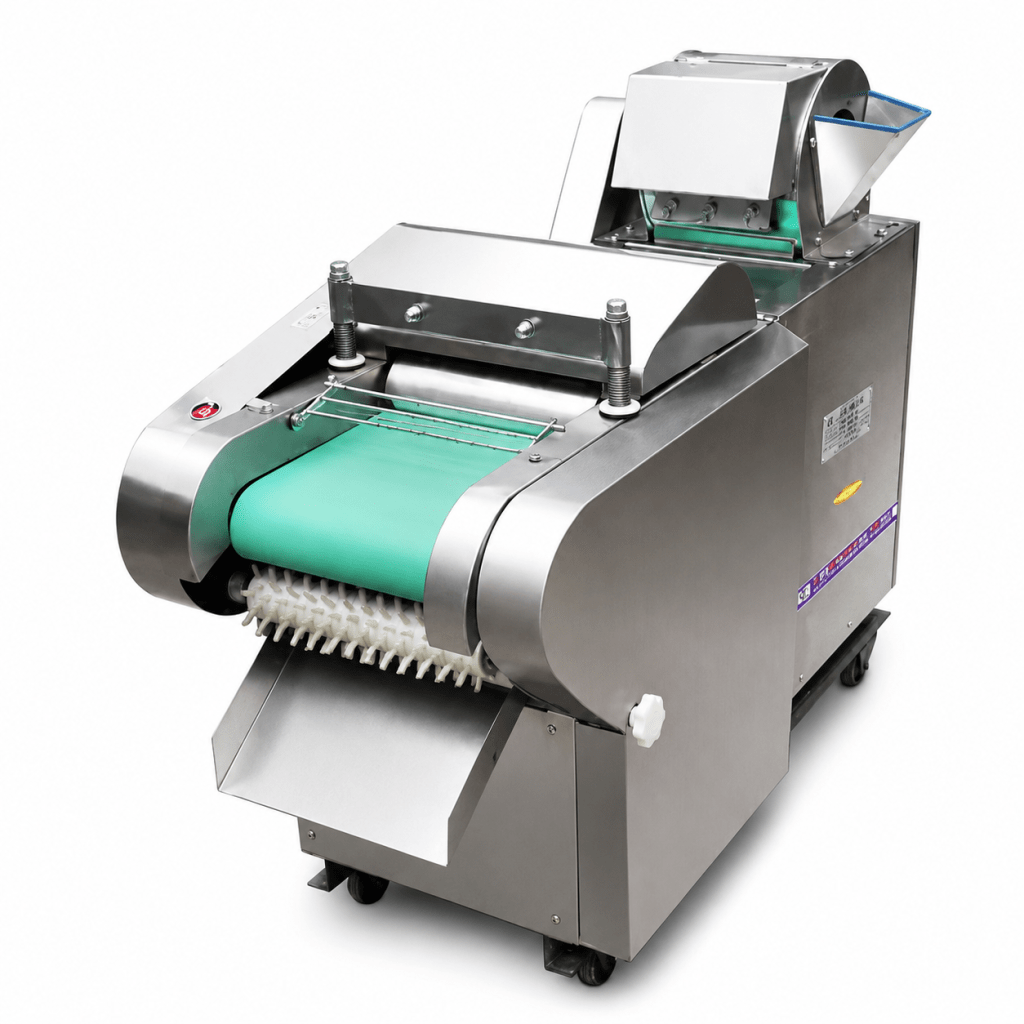
Sweet Potato Cutter
The cutter was intended to reduce manual cutting and produce more consistent fries.
The primary compatibility issue occurred here.
The cutter’s rotating action was better suited to softer or more uniform potatoes than the sweet potatoes being processed by Waking Up Agriculture.
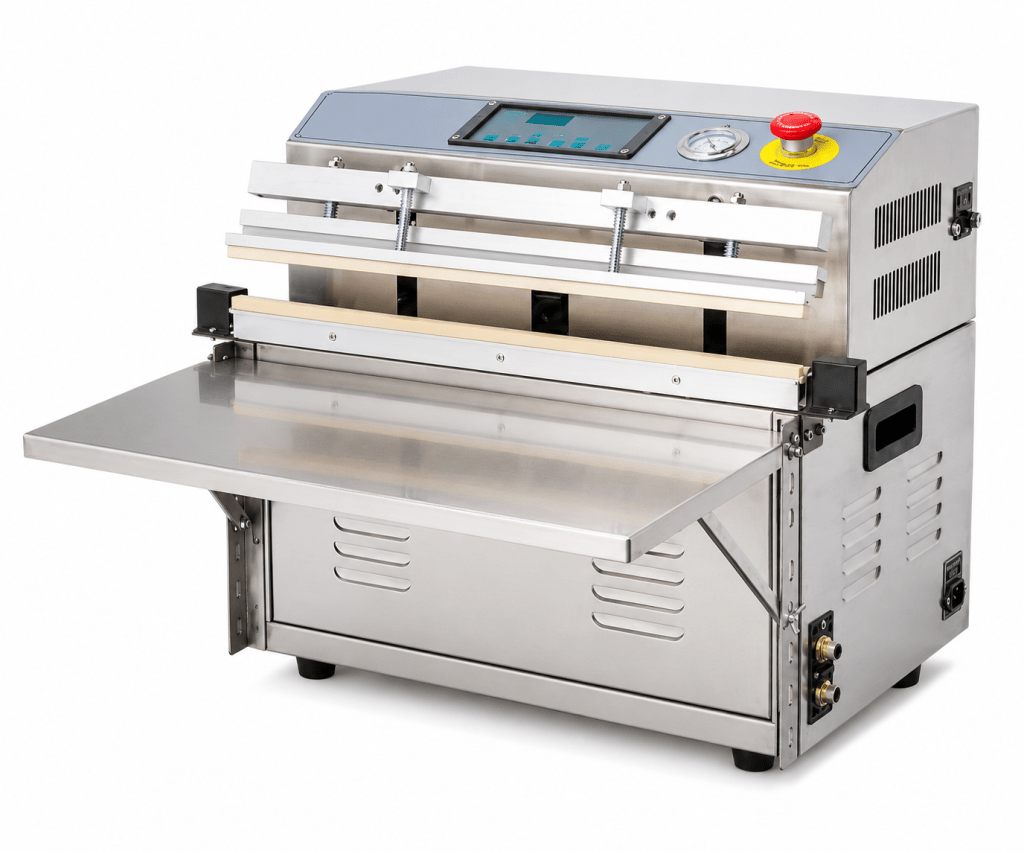
Vacuum Sealer
The vacuum sealer was introduced to support:
- Improved packaging
- Better product preservation
- Cleaner product presentation
- Preparation for refrigerated or frozen distribution
Food Processor
The food processor provided additional flexibility for food preparation, recipe development and possible alternative products.
The goal of the full equipment stack was to create a more efficient production flow from preparation through packaging.
It is important not to describe the entire equipment order as unsuccessful.
The major issue identified in the interview related to the compatibility between the cutter and the sweet potatoes being processed.
6. RESULTS: THE MOST VALUABLE OUTCOME WAS BETTER INFORMATION
The equipment did not create the production improvement Brandon originally expected. In fact, the breakage and additional handling associated with the cutting process increased production time and rejected product.
A positive equipment return cannot honestly be claimed from this application. The most useful outcomes were the information gained and the improvement in future decision-making.
1. Real-World Product Testing
The experience showed that selecting a potato cutter cannot be based only on the machine’s general function.
The decision must consider:
- The variety of potato
- The average size and shape
- The maturity of the crop
- The hardness of the product
- The level of seasonal variation
- The desired fry dimensions
- The machine’s cutting action
- The level of acceptable breakage
This is especially important for agro-processors working with local crops that may not be uniform.
2. Clearer Equipment Requirements
The experience helped identify what a more suitable cutting system would require. Brandon believed that a machine using a pushing action rather than a rotating action may have been more appropriate.
A suitable alternative may also have required:
- A larger industrial cutter
- A pressing or pushing mechanism
- Stricter potato sizing
- A specific potato variety
- Reduced machine speed
- Testing with the actual raw material before purchase
3. Alternative Production Options
The business also considered possible adjustments, including:
- Using a different sweet potato variety
- Sorting potatoes into more consistent sizes
- Changing the cutting system
- Reducing the machine speed
- Processing the sweet potato into a formed
- product
- Using the equipment for another compatible product
Brandon acknowledged that options were available. However, correcting the cutter issue would not have solved the other commercial and operational difficulties affecting the business.
4. Better Future Customer Conversations
Brandon’s experience provides useful questions for other customers considering similar equipment:
- What exact variety will be processed?
- How hard is the product?
- How much does the size vary?
- Has the machine processed this exact product before?
- Does the machine rotate, press or push the
- product through the blade?
- How will any preprocessing affect the final product?
- What level of breakage is acceptable?
These questions create a much stronger equipment assessment than simply asking whether a machine can cut potatoes.
7. WHAT ACTUALLY LED TO THE BUSINESS PAUSE?
It would be inaccurate to say that one machine caused Waking Up Agriculture to pause its sweet potato fries operation. The cutting challenge increased labour, breakage and rejected product. It was an important factor, but it wasn’t the only one.
Brandon also identified broader business challenges, including:
- Changes in the operating and partnership dynamics
- High production costs
- Difficulty competing with imported products
- Price pressure from established suppliers
- Fast-food chains use international supply arrangements
- Limited access to major commercial buyers
- The amount of time required to maintain production
Fixing the cutter issue would not have automatically fixed the market, partnership and pricing challenges. There were possible adjustments and alternative production methods available, but the wider business conditions made pausing the operation the more practical decision at the time.
The business didn’t fail because a machine simply “did not work.”
It reached a point where the overall model required more time, adjustment and investment than Brandon was prepared to continue pursuing under the circumstances.
8. CUSTOMER PERSPECTIVE
Brandon was clear that the machinery was not inherently bad. The issue was whether it suited the exact purpose for which he needed it.
“It just wasn’t compatible with what I was looking for.”
He also acknowledged that the machine could have worked under different conditions.
“We could have made some adjustments. You could have had a different variety of potato or a different specific size.”
He further clarified that other factors contributed to the business being paused.
“Although the machine wasn’t the ideal machine, other factors played in the closure of the business.”
When asked whether he would still recommend Your Equipment Suppliers to other businesses, Brandon said yes. His actions since the original purchase support that answer.
Approximately six years later:
- Brandon remains a YES customer.
- He continues to purchase buckets for his nursery operations.
- He has referred at least 12 customers to YES.
The strongest testimonial is not a perfect sentence from an interview. It is the business relationship that continued afterwards.
9. ADVICE FOR OTHER BUSINESS OWNERS
Despite the challenges, Brandon still believes equipment is necessary for serious agro-processing.
His advice was direct:
“Any time you want to be doing agro-processing, you need equipment.”
The lesson isn’t to avoid machinery; it’s to assess the application properly.
Before investing, an agro-processor should:
- Understand the characteristics of the raw material
- Confirm whether the machine has processed that exact product before
- Speak with previous users where possible
- Test the machine using the actual product
- Consider seasonal changes in size and maturity
- Understand the steps before and after the machine
- Confirm how much product variation the machine can tolerate
- Assess the effect of preprocessing on the finished product
A machine can match the required output size and still be the wrong machine for the production process. The crop must be part of the equipment decision.
10. WHAT WOULD HAVE HAPPENED WITHOUT TRYING?
Without attempting to mechanise production, Waking Up Agriculture would have continued facing the same manual limitations:
- Approximately 10 to 14-hour production days
- Heavy physical work
- Manual cutting and packaging
- Inconsistent output
- Limited capacity
- Little time for sales and business development
The equipment investment did not deliver the expected production result. However, the attempt answered questions that could not have been answered from a brochure or product description alone.
It showed:
- How the local sweet potatoes responded to the cutting action
- Where breakage occurred
- Why product size and maturity mattered
- Why blanching was not a complete solution
- What type of cutting system may have been more suitable
- What other commercial issues still needed to be resolved
The experience produced information that can now improve future decisions.
11. THE BIGGER BUSINESS LESSON
The biggest lesson from Waking Up Agriculture is that equipment selection must begin with the actual product and process.
The question cannot simply be:
Can this machine cut potatoes?
The better question is:
Can this machine consistently process the variety, size, maturity and hardness of sweet potatoes that this business will actually receive?
There is also a second lesson.
A supplier relationship is easy to praise when everything works perfectly. The stronger test is what happens after a difficult outcome. Brandon could have ended his relationship with YES after the cutter did not suit his application, but he didn’t.
His sweet potato fries operation paused, and he later focused on his nursery activities. His business changed, but his purchasing relationship with YES continued.
12. WHY THIS MATTERS FOR OTHER FOOD MANUFACTURERS
Food manufacturers often focus on capacity, speed, voltage and price, and while they are important, they don’t tell the whole story.
Equipment performance may also be affected by:
- Raw material variety
- Product dimensions
- Moisture and maturity
- Preparation methods
- Operator technique
- Cutting or processing action
- The production stages before and after the machine
For agricultural products, variation is normal, so it must be considered before equipment is selected.
Waking Up Agriculture is a useful case study because it does not pretend that every purchase produces an immediate success. It shows what can happen when a machine matches the general function but not the exact application.
It also shows how honest customer feedback can improve future recommendations.
13. WHY YES EARNED THE CUSTOMER’S CONTINUED TRUST
The strongest outcome from this case study is not the performance of the sweet potato cutter. It is the relationship that remained after the original order.
| A SINGLE TRANSACTION | A LONG-TERM SUPPLIER RELATIONSHIP |
| Ends after the machine is delivered | Continues as the customer’s needs change |
| Depends on one perfect outcome | Can survive an imperfect equipment match |
| Focuses only on the original sale | Learns from real customer feedback |
| Avoids difficult experiences | Allows customers to speak honestly |
| Measures success through one order | Measures trust over several years |
| Receives one purchase | Earns repeat purchases and referrals |
Brandon didn’t continue supporting YES because every part of the original application was perfect. He continued because his overall view of the supplier extended beyond one machine.
Although the original purchase may not have been perfect, over the course of the 6 years since, he has continued to purchase and refer others to YES because of the relationship and trust built.
That is the most meaningful result in this case study.
Relationship Growth
Original need: Equipment for sweet potato fries production
Challenge: The cutter was not ideally matched to the sweet potatoes being processed
Business change: The sweet potato fries operation was paused
Customer pivot: Brandon continued developing his nursery activities
Supplier relationship: YES continued supplying buckets for the nursery
Customer advocacy: Brandon referred at least 12 other customers
This is not a positive machine ROI story. It’s a customer trust and relationship growth story.
ROI AND BUSINESS IMPACT
A traditional financial ROI calculation would be misleading in this case. The cutter didn’t reduce Brandon’s processing time or increase usable output as expected. In fact, it did the opposite.
Breakage, additional handling and rejected product meant that the intended production return was not achieved. The honest business impact is better shown in two parts.
Operational Impact
| EXPECTED | ACTUAL |
| Faster cutting | Additional handling was required |
| Reduced manual labour | Manual intervention continued |
| More consistent fries | Product variation and breakage remained |
| Higher usable output | Reject levels increased |
| Greater production capacity | The process became harder to scale |
Relationship Impact
| MEASURE | OUTCOME |
| Original order | 4 pieces of processing equipment |
| Length of customer relationship | Approximately 6 years |
| Repeat business | Continued purchases for nursery operations |
| Referrals | At least 12 customers |
| Recommendation of YES | Yes |
The equipment application did not produce a positive operational return, but the supplier relationship continued to produce repeat business, loyalty and referrals.
Those two truths can exist at the same time.
FINAL TAKEAWAY
Waking Up Agriculture isn’t a story about a machine transforming a business overnight. It’s a story about what happens when a growing agro-processing business tests its production system against commercial reality.
Brandon invested in equipment because manual production was demanding, time-consuming and difficult to scale. The goal was to create a more efficient operation and build a platform for growth, but the outcome differed from expectations.
The equipment revealed challenges that were not fully visible beforehand, including the impact that:
- crop variation,
- product characteristics
- processing methods
can have on machinery performance. Those lessons ultimately proved just as valuable as the investment itself.
The sweet potato fries operation was eventually paused, but not because of a single machine or a single decision. Market pressures, production costs, business circumstances and operational realities all played a role; what stands out most is what happened afterwards.
Nearly six years later, Brandon remains a YES customer. He continues purchasing products for his nursery operation and continues to refer other customers to the company, and that longevity says something important.
A successful supplier relationship is not measured by whether every application is perfect. It is measured by whether trust remains after challenges occur.
For other food processors, the lesson is clear:
The right equipment decision begins long before the purchase. It starts with understanding the product, the process and the realities of production.
For YES, the lesson is equally important:
Real customer experiences, both positive and challenging, create the knowledge needed to make better recommendations in the future.
Choose Equipment Based on the Product You Actually Process
Before selecting equipment, YES looks beyond the machine name. The product variety, raw material size, condition, required output and full production process all matter.
Book an Equipment Fit Call with Your Equipment Suppliers to discuss:
- Your raw material
- Your current production process
- Your output requirements
- The result you need from the machine
- Possible product and equipment compatibility issues
The right machine starts with the right questions.
Some investments produce immediate results. Others produce valuable lessons. The strongest business relationships are built through both.


