

On a Tuesday morning that began like any other, a production line came to a halt; not because demand had weakened, but because a machine that had long exceeded its intended lifespan finally failed. The owner had anticipated this moment for years. What delayed action wasn’t uncertainty about the need to upgrade, but the assumption that replacing the equipment would require a large, immediate cash outlay.
A short conversation with an advisor changed that assumption. Financing made it possible to replace the equipment outright, spread the cost over time, and align payments with the productivity gains the new machine would deliver.
That scenario plays out daily across manufacturing sectors worldwide. Businesses generally know what needs upgrading. The real friction lies in how to fund modernization without compromising cash flow or operational stability. In 2026, that friction is increasingly unnecessary.
Why Equipment Financing Is a Strategic Tool in 2026?
Manufacturers today operate in a far more demanding environment than even a decade ago. Rising energy costs, tighter margins, supply chain uncertainty, and higher expectations around quality, traceability, and sustainability have reshaped the competitive baseline.
Relying solely on cash purchases for capital equipment often slows modernization and locks capital into fixed assets at the expense of agility. Financing, when used deliberately, converts large capital expenses into structured investments that move in step with revenue, efficiency gains, and cost savings.
In 2026, financing is also deeply shaped by policy. Across multiple regions, public and development funding is being directed toward sustainability, digitalisation, and productivity improvements. Manufacturers that align equipment upgrades with these priorities unlock more favourable financing conditions.
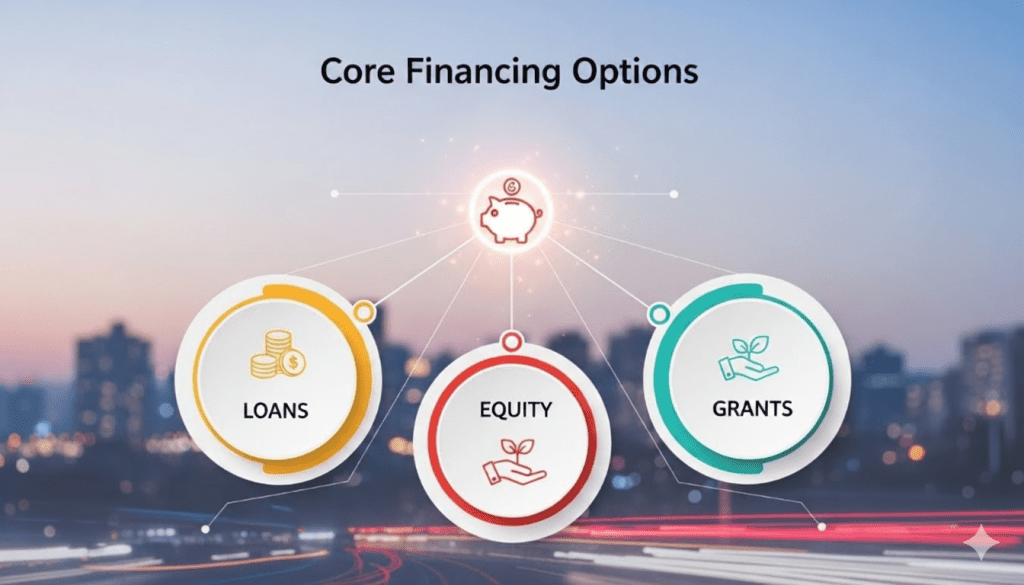
Core Equipment Financing Options
Equipment Loans
Equipment loans remain a widely used option for manufacturers investing in long-term production assets. Financial institutions provide capital secured against the equipment itself, typically with repayment terms matched to the asset’s useful life.
This approach suits machinery that forms the backbone of operations, processing lines, industrial cooling systems, packaging machinery, or fabrication equipment, where ownership and longevity matter.
Equipment Leasing
Leasing continues to gain traction where flexibility is critical. Operating leases allow businesses to use equipment without long-term ownership, making upgrades easier as technology evolves. Finance leases, by contrast, resemble loans and often include end-of-term purchase options.
For manufacturers navigating automation, digital controls, or fast-changing production technologies, leasing reduces exposure to obsolescence while preserving liquidity.
Vendor and Supplier Financing
Many equipment manufacturers and distributors now offer financing directly or through financial partners. These arrangements often streamline approval, shorten timelines, and align repayment structures with expected output gains.
Vendor financing is especially effective when equipment upgrades are time-sensitive or tied to compliance, capacity expansion, or new contracts.
Public and Development Funding: A Growing Layer of Support
Beyond private financing, public and development-backed grants have become a critical part of the global equipment upgrade landscape. Governments and multilateral institutions increasingly use financing as a policy tool to accelerate modernisation in key sectors.
A strong emphasis in 2025 was placed on two areas: sustainability and digital capability.
Green Transition Grant
Green transition funding supports investments that reduce environmental impact while improving operational efficiency. For manufacturers, this often includes energy-efficient machinery, cleaner production technologies, renewable energy systems linked to operations, and waste-reduction solutions.
In several regions, this financing is offered on concessionary terms or through blended models that combine loans with grant components. The result is a lower effective cost of upgrading equipment that also reduces long-term operating expenses.
Digital Transformation Grant
Digital transformation funding targets productivity, competitiveness, and supply chain integration. Eligible investments commonly include automated or digitally controlled equipment, production monitoring systems, enterprise software, and traceability technologies.
These programmes recognise that digitalisation is no longer optional. Manufacturers that fail to modernise digitally face higher costs, slower response times, and increasing difficulty meeting buyer and regulatory expectations.

A Regional Example: EU-Funded Support for CARIFORUM States
In certain regions, these priorities are backed by structured international funding. For example, CARIFORUM member states have access to European Union–funded programmes supporting both green transition and digital transformation initiatives.
These funds are designed to help eligible businesses invest in energy-efficient equipment, sustainable production methods, and digital systems that enhance productivity and competitiveness. While the structure and eligibility criteria vary, the principle is consistent with global trends: align private investment with long-term development goals and reduce the cost of modernization.
Such programmes are typically most effective when combined with local bank financing or vendor arrangements, creating blended structures that balance affordability with scale.
Choosing the Right Financing Approach
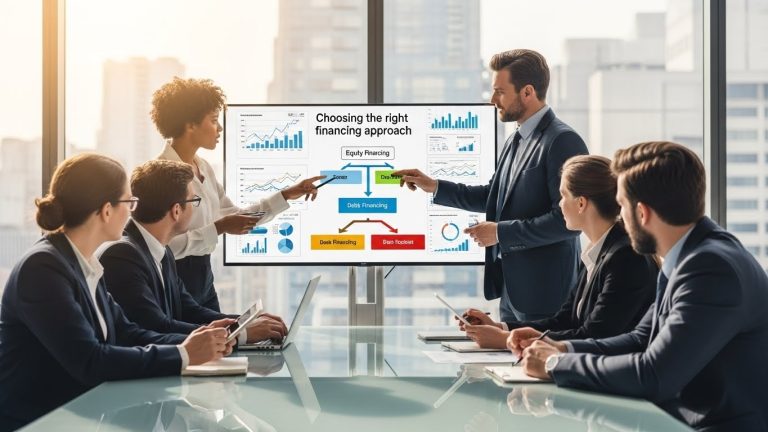
The most effective financing strategies start with intent, not instruments. Manufacturers should first clarify what the upgrade is meant to achieve: cost reduction, capacity expansion, compliance, sustainability, or digital readiness, and then select financing that supports that outcome.
Long-life assets often justify loans or finance leases. Rapidly evolving technologies may favour operating leases. Sustainability- or digital-led upgrades should actively explore public or development-backed funding where available.
Financing decisions should be judged not only by interest rates, but by their impact on cash flow, resilience, and long-term competitiveness.
Case Study: Financing an Upgrade Through Alignment
A mid-sized manufacturer faced escalating energy costs and inconsistent output due to outdated equipment. A full cash purchase would have delayed action indefinitely.
By combining supplier financing with green-focused development support available in its region, the company upgraded its machinery with minimal upfront strain. Energy use declined, throughput improved, and operational savings offset financing costs faster than projected.
The upgrade delivered not just new equipment, but measurable improvements in margin and reliability.
Preparing for Financing in 2026
Manufacturers seeking financing should approach the process with clarity. Financial records, realistic projections, and a well-defined upgrade rationale significantly improve outcomes. Equally important is understanding which financing programmes, private, public, or blended, are available and how equipment upgrades align with broader economic or policy priorities.
Moving Forward
In 2026, equipment financing is not a secondary consideration; it is a strategic capability. Across industries and regions, manufacturers have access to loans, leasing, vendor financing, and development-backed funds supporting green and digital upgrades.
Modernization no longer hinges on having excess cash on hand. It hinges on making informed financing choices that convert equipment upgrades into long-term advantage.
Apply for financing today to explore options that support sustainable, competitive manufacturing, wherever you operate.
Listen to our podcast below for more information.


