


Client Snapshot
From Slow, Manual Production to Scalable, Consistent Processing
Business: CharloFarms
Owner: Gale Charles
Location: Based in Trinidad, serving customers nationwide
Operation Type: Spices & Seasonings
YES Equipment:
- Ozone Bubble Washer
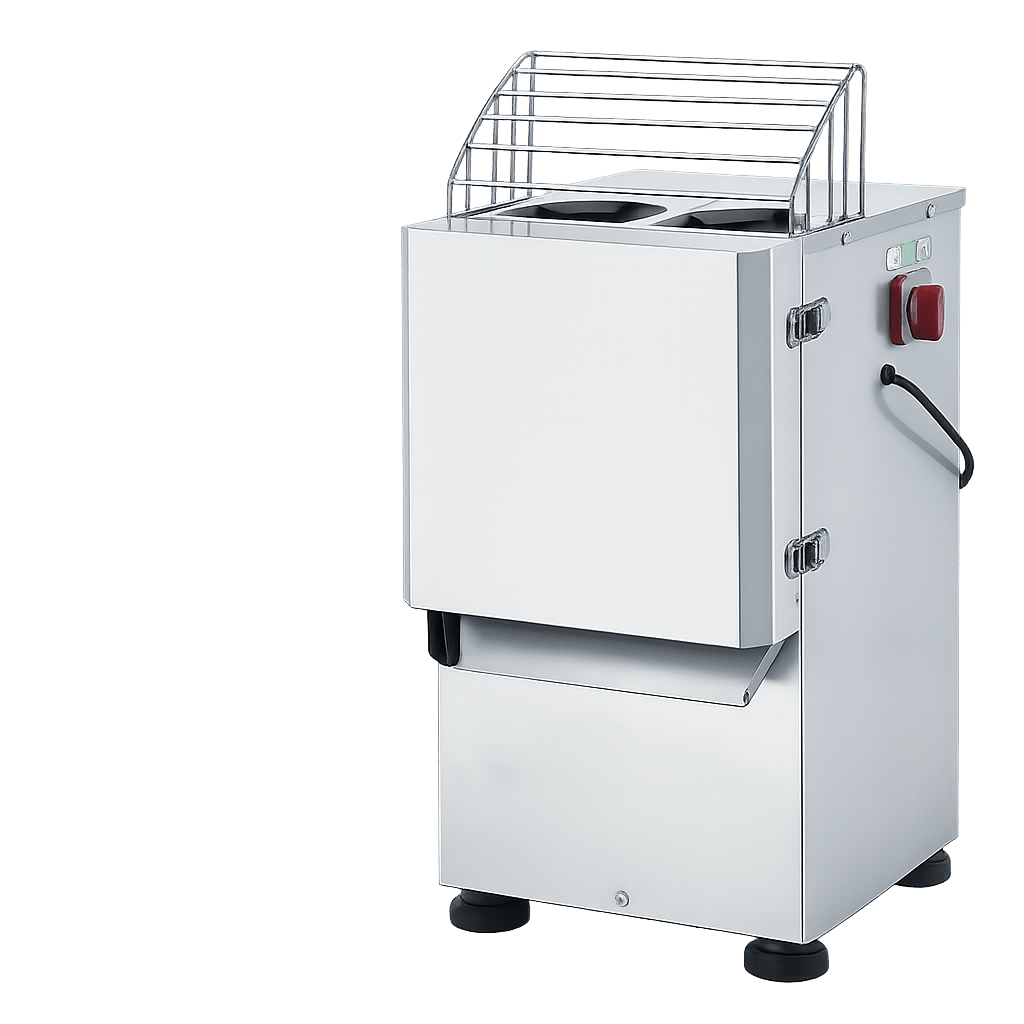
- Vegetable Slicer Machine
- Commercial Dehydrator
1. BEFORE → AFTER TRANSFORMATION
The Ozone Bubble Washer, Vegetable Slicer Machine, and Commercial Dehydrator became the foundation behind CharloFarms’ production transformation.
THE PROBLEM (BEFORE): MANUAL PROCESSING MODE
CharloFarms was growing, but manual processing was becoming a constraint.
The upgrade to a more mechanised production system helped the business move from labour-intensive preparation into a faster, more scalable, and more consistent production operation.
| BEFORE (Manual + Labour Intensive) | AFTER (Efficient + Scalable) |
|---|---|
| Manual washing and sanitising | Automated washing and sanitising |
| Manual destemming and preparation | Faster ingredient processing |
| Multiple workers required | One worker can manage the preparation |
| Approximately one week production cycle | Approximately a two-day production cycle |
| Labour-heavy workflow | Streamlined workflow |
| Labour recovery | Estimated 90 labour-hours recovered per week |
| Annual recovered labour value | Estimated TTD $140,000 per year based on 3 people at TTD $30/hour |
| Limited production capacity | Doubled production capacity |
| Opportunities to improve consistency | Greater consistency across batches |
| Owner focused on production challenges | More time for business development |
2. Market Context: Why This Upgrade Matters
The global spices and seasonings market was valued at approximately USD $29.5 billion in 2024 and is projected to exceed USD $45 billion by 2032, driven by increasing demand for convenience foods, authentic flavours, and value-added agricultural products.
Across Trinidad & Tobago and the wider Caribbean, seasonings, spice blends, green seasonings, pepper sauces, and condiments remain some of the region’s most established food manufacturing categories. Trinidad & Tobago is home to several major seasoning and condiment manufacturers that distribute products throughout the Caribbean and international markets.
This matters because growing demand creates opportunity, but opportunity alone does not create a scalable business.
For local seasoning manufacturers, the real question is:
Can the business process enough product consistently to meet demand?
That is where production equipment becomes a growth decision.
3. The Business Problem: Demand Was Outgrowing Production
Many small food businesses don’t struggle because customers are not interested. They struggle because their production systems cannot support the demand they have already created.
For CharloFarms, the demand existed, the products had market interest, and the business had customers.
The issue was processing capacity.
The previous setup created limitations such as:
- Labour-intensive preparation
- Manual washing and sanitising
- Manual destemming
- Slower processing workflows
- Production bottlenecks
- Opportunities to improve consistency
- Limited time for strategic growth
The business had reached the point where its production methods were no longer aligned with its growth ambitions.
| Before the Upgrade | After the Upgrade |
|---|---|
| Labour-intensive preparation | Mechanized processing |
| One-week production cycle | Two-day production cycle |
| Three workers required | One worker required |
| Limited production capacity | Doubled capacity |
| More operational stress | Improved workflow |
| Limited time for growth | More time for business development |
4. The Bottleneck: Production Capacity
Before mechanising her operation, Gale was processing approximately 200 pounds of pimento peppers manually, requiring significant labour.
A crew of approximately three people was needed for preparation and processing activities, taking five (5) days, 10 hours per day, to complete their production cycle.
If she wanted to expand, the increased production volumes would place an even greater strain on the system she had in place, and by extension, the business.
For food manufacturers, this is often the stage where growth becomes uncomfortable. Sales increase, but the production system begins to strain.
That is when equipment stops being a purchase and becomes a growth decision.
| Challenge | Consequence |
|---|---|
| Manual washing and sanitising | Increased preparation time |
| Manual destemming | High labour requirements |
| Multiple handling stages | Slower production |
| Labour-intensive workflow | Reduced efficiency |
| Limited processing capacity | Difficulty scaling |
| Owner heavily involved in operations | Less time for growth |
4. YES Recommendation (Strategic Equipment Stack)
THE SOLUTION
Ozone Bubble Washer + Vegetable Slicer Machine + Commercial Dehydrator
Instead of incremental fixes, the focus was clear:
Increase Capacity. Improve Consistency. Reduce Production Strain.
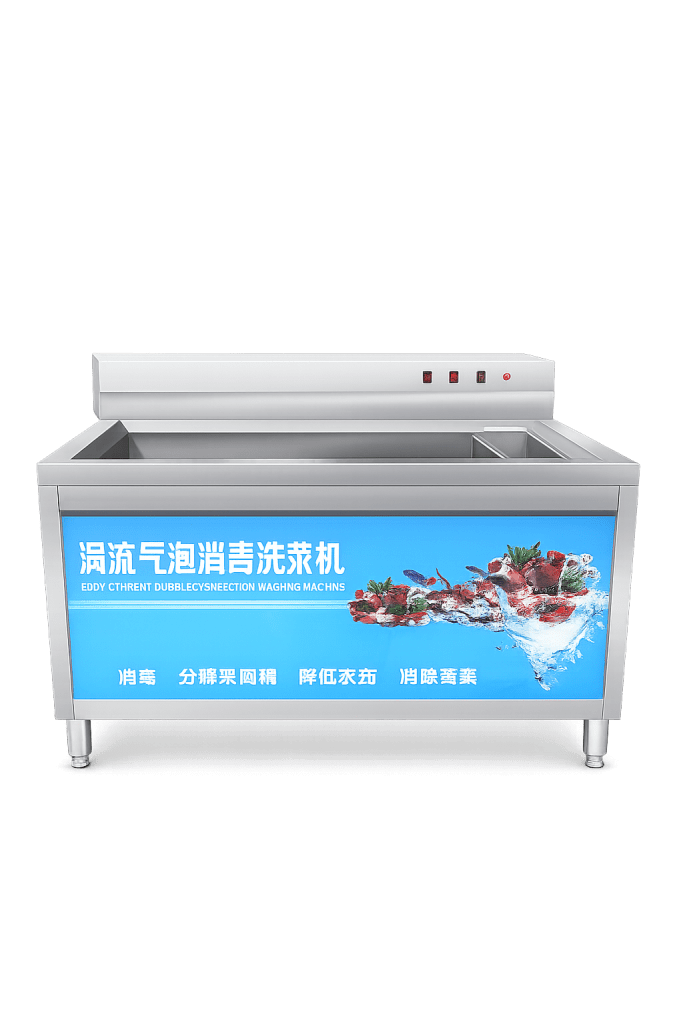
Ozone Bubble Washer
→ Automated washing and sanitising
→ Reduced preparation time
→ Improved food safety
→ Reduced manual handling
Vegetable Slicer Machine
→ Faster ingredient preparation
→ Improved consistency
→ Reduced labour requirements
→ Improved workflow efficiency
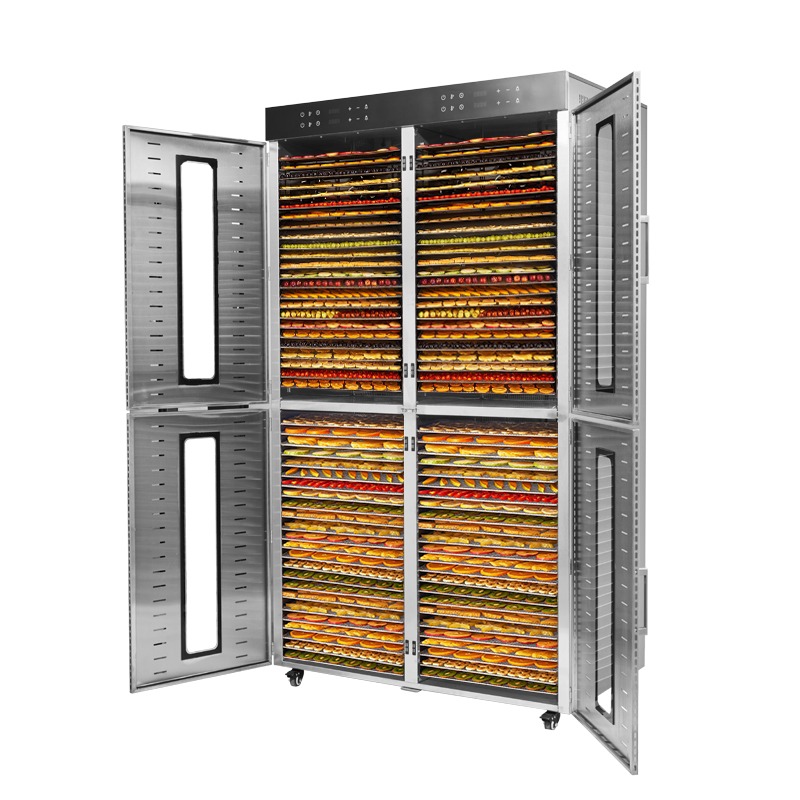
Commercial Dehydrator
→ Expanded product development opportunities
→ Ingredient preservation
→ Value-added production
→ Improved production flexibility
What YES Added:
✔ Equipment matching to production needs
✔ Practical guidance and support
✔ Confidence in performance and reliability
✔ Customer support and communication
✔Ongoing assistance when questions came up
Not just a machine; a production upgrade.
6. Results: Operational & Business Impact
1. Doubled Production Capacity
The new equipment allowed CharloFarms to significantly increase output without increasing labour requirements.
Impact:
- More product available
- Greater ability to meet demand
- Better readiness for larger orders
- Improved scalability
Customer Quote
“We were able to double our capacity.”
2. Production Reduced From One Week to Two Days
The equipment significantly reduced the time required to process ingredients and complete production.
Impact:
- Faster production turnaround
- Improved workflow efficiency
- Less time spent on preparation
- More productive use of labour
Customer Quote
“What would normally take a week now takes about two days.”
3. Labour Reduced From Three Workers to One
The mechanised system reduced labour requirements dramatically.
Impact:
- Lower labour demands
- More efficient use of staff
- Reduced operational pressure
- Easier production management
Customer Quote
“We had about three people doing the destemming. Now we have one.”
4. Improved Product Consistency
One of the primary goals of the investment was improving consistency.
Impact
- Better batch-to-batch consistency
- Improved quality control
- More reliable finished products
- Better customer experience
In food production, consistency is not a luxury.
Consistency is what allows customers to trust the brand.
5. Reduced Operational Strain
Mechanisation reduced the pressure created by labour-intensive production.
Impact
- Smoother workflow
- Less production stress
- Better scheduling flexibility
- Improved use of labour time
Customer Quote
“Quality of life, stress-free, time. It helps you spend more time with family.”
6. More Time for Business Development
The equipment created opportunities beyond production.
Impact
- More time for strategic planning
- Greater focus on expansion
- Ability to pursue new product ideas
- Increased attention on future growth
Customer Quote
“I can think of doing business development, which is my passion. I always look at the new thing, the next thing.”
ROI Example: Labour Recovery
The financial value of the upgrade can be understood through recovered production time.
In this case, production work involved 3 workers, with each person’s labour valued at TTD $30 per hour.
That means the combined labour value was:
TTD $90 per hour
The equipment helped reduce manual preparation, washing, sanitising, and processing work while recovering approximately 10 production hours per day.
Because 3 workers were involved, this represents 30 labour-hours recovered per day.
The financial value of the upgrade can be understood through recovered production time.
TIME SAVED30 LABOUR HOURS / DAY REGAINEDProduction reduced from approximately one week to two days. → Same output achieved in significantly less time 30 hrs/day × 3 days = 90 hrs/week recovered per week |
WEEKLY VALUE (LABOUR EFFICIENCY)Valued @ TTD 30/hr 90 hrs × 30 = TTD $2,700/week saved |
YEARLY IMPACTTTD 2,700/week × 52 = TTD 140,400/year in recovered time value |
PAYBACK CALCULATIONEquipment InvestmentOzone Bubble Washer: TTD $23,760 Vegetable Slicer Machine: TTD $4,000 Commercial Dehydrator: TTD $27,600 Total InvestmentTTD $55,360 ROI Year 1: |
***These figures are used as an example only***
Estimated First-Year Payback
254% Operational Payback in One Year
The recovered labour value alone could exceed the original equipment investment by more than double within the first year.
And that still does not include the full business upside.
This ROI example does not include:
- Increased production capacity
- New product development opportunities
- Improved consistency
- Ability to fulfil larger orders
- Reduced production stress
- Improved food safety
- Better readiness for retail expansion
- Greater owner flexibility
- More time for family and business development
For many growing food manufacturers, the biggest return comes from removing the bottleneck that was limiting growth.
Market Validation
CharloFarms’ improved production system not only helps internally.
The improvements strengthened:
- Product consistency
- Production reliability
- Business scalability
- Growth readiness
This created a valuable growth cycle:
Better Production → Better Consistency → Stronger Customer Experience → Increased Growth Potential
That is important because it shows how the right production system can strengthen both the business and the brand.
7. What Would Have Happened Without the Equipment?
Without upgrading, CharloFarms would likely have continued facing the same production constraints:
- Labour-intensive processing
- Slower production
- Capacity limitations
- Consistency challenges
- Less time for business growth
- Reduced ability to scale
Equipment transformed the operation from labour-intensive production into a more scalable manufacturing system.
That is the danger for many food businesses.
Demand grows, but the system underneath the business does not.
8. Customer Testimonial
“I am totally satisfied with my service from YES today because I have tried other suppliers and found them problematic at best.
With YES, I get all my equipment delivered directly to my door. I get tutorials on how to use them, and I get after-sales service.
Those things are important, and that’s what makes the difference.”
Gale Charles, Owner | CharloFarms
9. Why This Matters for Other Business Owners
CharloFarms’ story reflects a common challenge across Trinidad & Tobago and the wider Caribbean.
Many food manufacturers are not limited by ambition.
They are limited by production infrastructure.
As businesses grow, the pressure usually appears in the same places:
- Too much manual labour
- Limited production capacity
- Inconsistent processing
- Longer production hours
- Difficulty meeting demand
- Less time for business development
- Increased operational stress
At that stage, business owners have a choice.
They can continue working harder within the same system.
Or they can upgrade the system.
CharloFarms chose to upgrade the system.
10. Long-Term Value: What the Investment Continues to Return
The ROI calculation only measures the first year of recovered labour value.
The real advantage is what happens after the equipment has already paid for itself.
Once the investment is recovered, CharloFarms continues benefiting from:
- reduced labour requirements
- faster production cycles
- improved workflow efficiency
- greater production control
- improved product consistency
- doubled production capacity
- improved food safety processes
- opportunities for new product development
Unlike a recurring labour expense, the equipment continues creating value year after year.
11. Annual Time Recovery
Total Time Recovered Per Year
30 hours/week × 52 weeks
1,560 HOURS RECOVERED PER YEAR
That equals approximately:
- 195 full 8-hour workdays
- nearly 6.5 months of working time recovered annually
- almost half a year’s worth of working hours returned every year
Financial Value Recovered Annually
TTD $2,700/week × 52 weeks
TTD $140,400 RECOVERED PER YEAR
And that recovery continues beyond Year 1.
What Can Be Done With 1,560 Extra Hours?
Those hours are no longer spent manually washing, sanitising, destemming, slicing, and preparing ingredients.
That recovered time can now go toward:
- developing new seasoning and spice products
- expanding into dehydrated product lines
- growing distribution into additional supermarkets and retailers
- attending trade shows, expos, and networking events
- focusing on business development opportunities
- spending more time with family
- reducing operational stress and burnout
- planning future growth initiatives
As Gale explained:
“Quality of life, stress-free, time. It helps you spend more time with family.”
And perhaps most importantly:
“I can think of doing business development, which is my passion. I always look at the new thing, the next thing.”
Sometimes the biggest benefit of equipment is not just productivity.
It is creating the time and freedom to focus on growing the business instead of constantly working in it.
What Can TTD $140,400 Per Year Help Fund?
Instead of being consumed by labour-intensive production processes, the recovered value can now go toward:
- expanding product lines
- investing in additional equipment
- increasing production capacity even further
- improving packaging and branding
- entering new retail locations
- attending trade shows and promotional events
- creating a stronger financial cushion during slower periods
- reinvesting into long-term business growth
- taking trips to various Caribbean countries
The value no longer disappears into inefficient manual processes.
It becomes usable capital that can strengthen both the business and the owner’s quality of life.
12. The Bigger Business Shift
Before the Investment
- Production took approximately one week
- Three workers were required for preparation and processing
- Manual washing, sanitising, destemming, and slicing created bottlenecks
- Capacity was limited by labour-intensive processes
- Consistency was more difficult to maintain
- Growth opportunities were restricted by operational demands
- Much of the owner’s time was spent managing production
After the Investment
- Production was reduced to approximately two days
- Labour requirements dropped from three workers to one
- Production capacity doubled
- Consistency improved
- Workflow became more efficient
- Growth became more achievable
- More time became available for family and business development
- New opportunities emerged through dehydration and value-added products
The equipment did not simply save time.
It transformed CharloFarms from a labour-intensive operation into a more scalable business with the capacity, consistency, and efficiency needed to support future growth.
13. Why YES Wins
Other suppliers sell machines.
YES sells outcomes.
Typical Seller | YES |
| “Here’s the machine.” | “Here’s your bottleneck removed.” |
| Price-based | ROI-based |
| Transactional | Partnership + support |
| Equipment Only | Equipment+ Guidance + Results |
| Generic Recommendations | Production-matched solutions |
Final Takeaway
CharloFarms did not simply purchase an Ozone Bubble Washer, Vegetable Slicer Machine, and Commercial Dehydrator.
They:
- upgraded their production system.
- reduced a one-week production process to approximately two days.
- reduced labour requirements from three people to one.
- doubled production capacity.
- improved product consistency.
- recovered valuable production time.
- created more room for innovation, business development, and future growth.
For business owners, the lesson is simple:
- Growth is not only about increasing sales.
- Growth requires the production capacity to support those sales.
If your business is already seeing demand but struggling with labour-intensive processes, inconsistent production, or limited output, the issue may not be marketing. It may be your production system.
For CharloFarms, the challenge wasn’t creating demand. The challenge was creating a production process capable of keeping up with it.
At YES, we help food manufacturers identify the operational bottlenecks holding back growth and match them with equipment designed for their actual production needs.
Because the right equipment doesn’t just improve production; it creates the foundation for sustainable growth.
Stop producing in limits. Start producing at scale.
Book a consult: Right Machine. Right Outcome. Zero Guesswork.


