

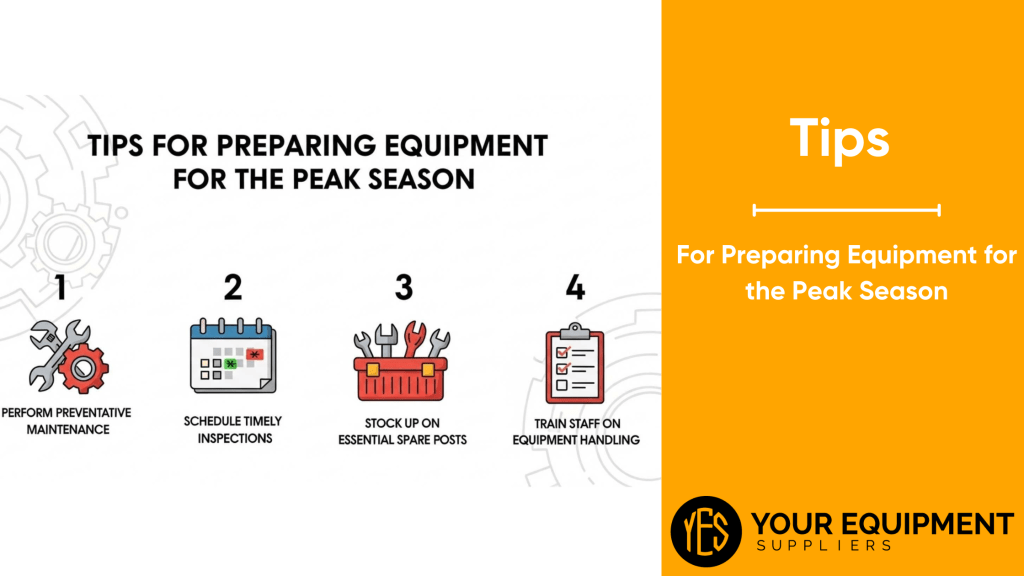
Peak season looms every year, so every manufacturing business knows the feeling it brings. Orders increase, timelines tighten, and machines that felt reliable a month ago start showing small quirks that can turn into big setbacks. The busiest time of the year is never just about producing more. It is about producing more without sacrificing quality, safety, or profitability.
A well-prepared facility approaches peak season the way a marathon runner trains for race day. You do not wait until the sprint begins to check your shoes. The most successful companies take time to prepare equipment, streamline workflows, and eliminate hidden risks before workloads jump.
This guide walks through the practical steps to help you enter the busy season with confidence. The goal is simple.
- Reduce downtime.
- Increase output.
- Keep your industrial equipment performing as if every day is the first day of operation.
1. Begin with a Full Equipment Health Audit
An equipment audit is your map. Without it, you are guessing where the problems are. With it, you can see exactly which machines are ready for the pressure of peak season and which ones need attention.
Start by reviewing each piece of equipment individually. Note the age, the usage hours, the last service date, and any maintenance issues that your operators have flagged. Even the smallest concern matters because minor issues tend to magnify under heavier loads.
Dig deeper by looking at performance data from the past few months. Compare output rates, cycle times, scrap levels, and energy consumption. Irregular cycles, temperature spikes, or reduced efficiency usually signal worn components that will not tolerate high demand.
Think of the audit as a full physical checkup for your facility. It gives you an honest baseline, helps you allocate your maintenance budget wisely, and lets you plan work before the season gets busy.

How Preventative Maintenance Can Ease Your Burden During Peak Season
Businesses that stay consistent with preventative maintenance usually enter peak season with fewer surprises. Regular cleaning, lubrication, and calibration mean your audit becomes a quick confirmation rather than a hunt for hidden problems. Your team already knows how each machine should feel and sound, so spotting early warning signs is much simpler. A strong maintenance routine shortens your repair list and lets you focus on fine tuning for higher production rather than scrambling to fix avoidable issues.
2. Clear the Maintenance Backlog while Demand is Low
Many manufacturing businesses carry a quiet list of delayed repairs. A belt that slips occasionally. A sensor that needs calibration. A gearbox that makes a new sound. These are easy to ignore during slow seasons and almost impossible to ignore during peak production.
Once your audit is complete, sort your equipment into three groups. Machines that are healthy. Machines that need attention soon. Machines that need immediate repair.
Address the urgent ones first. They are the high risk points in your production chain. Then schedule repair or calibration work for the mid tier machines. Order spare parts early because suppliers often face longer wait times during peak regional or international cycles.
Completing this backlog before the rush protects your workflow from sudden breakdowns and helps your team stay in control during the busiest days.
3. Optimise Settings for High Volume Performance
Machines are built to be flexible, but they are not always set for high-speed production out of the box. Peak season is the moment to revisit your settings and fine-tune your equipment so it performs at its strongest.
Review temperature settings, cycle speeds, feed mechanisms, fill levels, blade sharpness, and load capacities. A small adjustment in one area can create a major improvement in speed or efficiency.
Talk with your operators as part of this tuning process. They often notice subtle patterns that data alone does not reveal. Maybe a machine runs smoother at a slightly slower feed speed, or maybe it produces more consistent results when the lubrication schedule changes.
Once you make your adjustments, train your entire operating team to follow the updated procedures. Clear communication reduces errors and supports consistency across every shift.

4. Confirm All Safety and Sanitation Systems are Ready
A rise in production usually means more movement, more stress, and more opportunities for mistakes. Safety structures must be checked in advance because there is no room for shortcuts in the middle of a rush.
Examine guards, switches, emergency stops, wiring, belts, and all moving components. Look for signs of wear, looseness, or heat damage. Inspect airflow and ventilation systems to prevent overheating. Check all sensors and automation features so they respond correctly under pressure.
If your business works with food, beverages, or pharmaceuticals, strengthen your sanitation process. More production usually means more cleaning cycles and more contact points for cross contamination. Create a cleaning schedule that fits the increased workload without disrupting output.
A clean and safe facility protects your team, your customers, and your reputation during your most important months.

5. Build Your Support and Response Plan before You Need It
The most stressful moment in peak season is when a machine stops unexpectedly and you do not have a plan. A response plan removes panic from the situation. It ensures that your team knows exactly who to call and how fast help will arrive.
Choose a reliable service partner and confirm availability for the busiest part of the year. Clarify response times, call procedures, and emergency protocols. Discuss whether weekend or after-hours support is available.
Internal preparation also matters. Stock basic spare parts like bearings, sensors, belts, O-rings, and lubricants. Train your internal team on small repairs so they can handle minor issues quickly.
Your goal is to avoid long downtime gaps. Every minute of delay during peak season affects your delivery timelines and customer satisfaction. A strong support plan keeps your production line resilient.

6. Monitor Your Performance with More Consistency During the Rush
Once the busy season starts, the real work begins. This is where monitoring becomes essential. The earlier you catch unexpected patterns, the faster you can prevent a major breakdown.
Set up regular performance checks. Look at vibration levels. Look at temperature changes. Listen for new sounds or sharp increases in energy usage. These signs are often early warnings.
Encourage your operators to report changes immediately. A machine that was running perfectly last week can start showing wear quickly under heavier loads. Fast reporting allows you to respond before the problem spreads.
Think of monitoring as your early detection system. It is better to pause a machine for ten minutes to investigate a noise than to shut down an entire production line for half a day.

7. Use Post-season Analysis to Build Smarter Routines for Next Year
After peak season ends, resist the urge to fall back into normal routines without reflection. The past busy period gave you valuable data that can improve your next preparation cycle.
Talk with operators and maintenance staff to understand what went smoothly and what caused the most stress. Review downtime logs, repair records, and production data. Identify patterns that repeat year after year.
Maybe you discovered that one machine always struggles under high load or maybe a particular part wears out faster than expected. Use those findings to adjust your maintenance schedule, upgrade equipment, or refine your production layout.
A thoughtful post season analysis transforms every busy season into a learning cycle that strengthens your overall operation.

Quick Preparation Checklist
Keep this checklist visible in your facility as peak season approaches.
• Complete your full equipment audit
• Remove all delayed repairs before demand increases
• Optimise machine settings for high volume output
• Confirm safety and sanitation systems are ready
• Build a clear support plan for urgent repairs
• Monitor performance daily during the busy period
• Review results and improve for next year
Conclusion
Peak season rewards preparation. Manufacturing businesses that invest time into equipment readiness enjoy smoother production, fewer breakdowns, and stronger delivery performance when the pressure rises. The best strategy is to start early. Give your machines the attention they need before they are placed under strain.
A well-prepared facility is faster, safer, and more reliable, which supports better results during the most demanding time of the year. Now is the perfect moment to schedule a pre-season checkup and ensure that every machine enters the busy season ready to perform.
Want to hear more about how to prepare? Listen to our podcast below.


